“Subway Sparrow”: Book Review #3

“Subway Sparrow,” by Leyla Torres, offers a look into how people from different cultures, languages, and backgrounds can all come together to accomplish a common goal (in this case, for the greater good of saving a small sparrow who gets trapped on the subway). The text features three languages: English, Spanish, and Polish, making it a very diverse and multicultural work. The illustrations also reflect different cultures through the way the people are dressed as well.
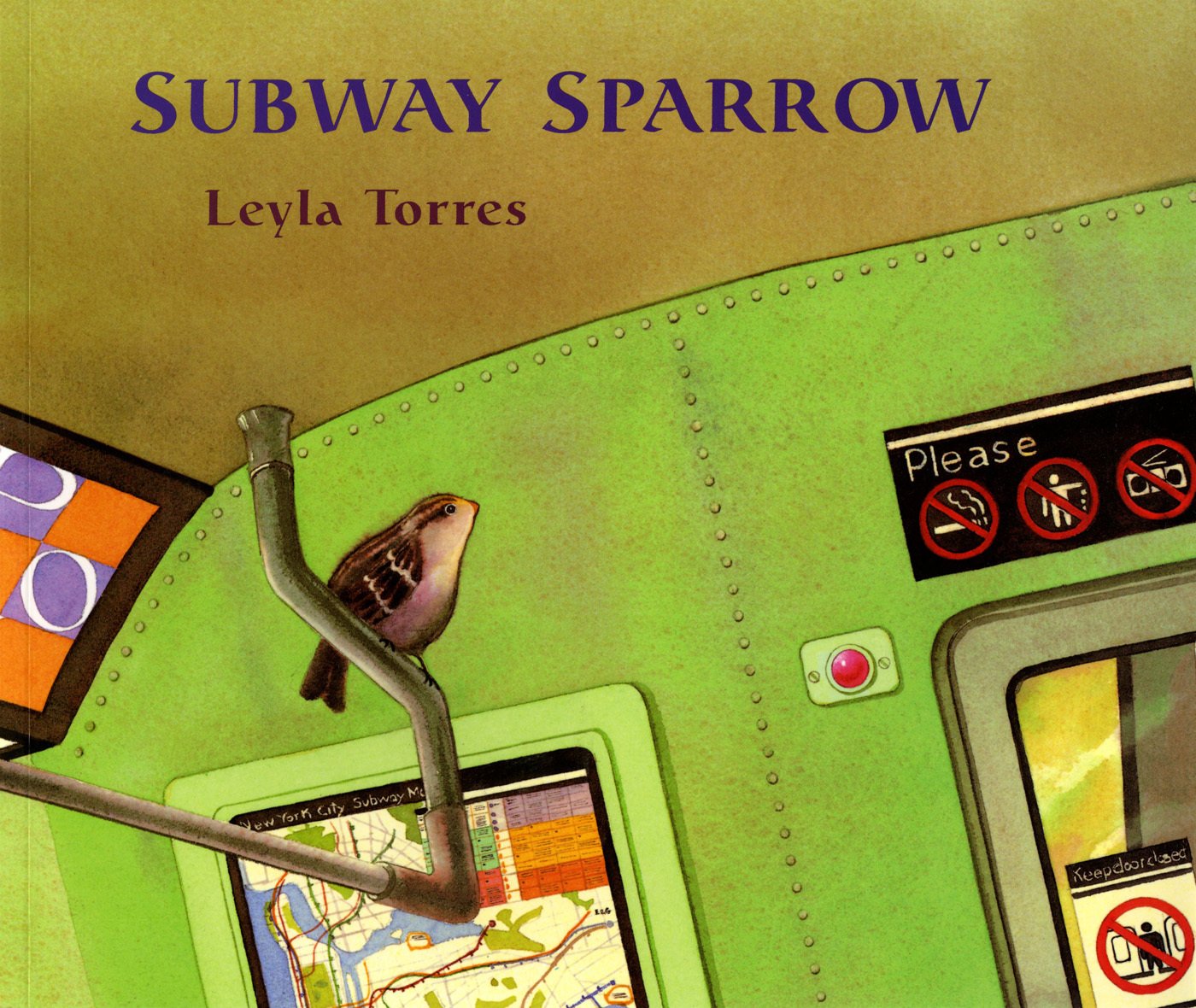
The book takes place on a subway train in Brooklyn, New York, so this would be a great book to teach in urban areas as well as areas around New York (like Connecticut) as students will be able to relate quite well hopefully.

Despite the language barriers between the English-speaking girl, the Spanish-speaking man, and the Polish-speaking woman, they work together, differences and all, to save the sparrow and release him back into the sky. The book ends with each main character saying “goodbye” to the sparrow in their own language. For example, the Spanish-speaking man says, “Adios, parajito” while the Polish-speaking woman says, “Do widzenia.” (Both phrases essentially mean “goodbye” as I know from my past experience with Spanish and my Polish-speaking grandmother).

Let’s focus on the fact that I am Polish and how this book made me feel that a part of my background was represented in this text. To be honest, it made me feel super good that my ethnicity was included in this book, especially since I did not expect it at first. The title and cover just seem like the book will be solely in English (which, truthfully, is just not as interesting, challenging, or intriguing). It’s great to switch things up and invite children from those featured cultures to participate and even translate! If we had a student who speaks French, for example, too, even though it is not featured in this book, we should certainly invite him/her to share how to say “goodbye” in his language. Not only would a multicultural work like this lead to grand, educational, and enriching conversations, but texts like this make students feel valued. And I can personally vouch for this, as I feel so good about my Polish background being represented in this book.

I love how this text is not so sanitized or “whitewashed,” as some of my professors would say. For example, on one of the last pages in the story, there is a man sitting on the sidewalk and he has a sign indicating he is homeless. While this may be an “absolutely not” for some teachers who would shy away from this page or even teaching this text altogether, I think it is valuable that this book includes this reality. We could do so much work around this one illustration and, at the very least, discuss what is happening here.

This book may be a great one to do a picture walk with too, as this book is very visual and picture-focused. There are not a boatload of words, either, so I think this book would be easy for many children to fully understand. Plus, the pictures and plot of the story is quite straightforward and clear. As a result, this book could definitely be taught in kindergarten in my view.

I would definitely teach this book in my future classroom as it is a great opener to many possible activities. For instance, I, as a teacher, could use this book to start talking about different races, different cultures, different languages, different socioeconomic statuses, and the list goes on. This text is so valuable for students to read and engage with and the added bonus is the simple, yet happy ending when the sparrow is able to fly high in the sky once again. I would certainly recommend this book to teachers and especially those teachers that need to switch up their solely English-based books.

Participate Task: Mythology

I think it can be so much fun (especially for children) to create their own endings, characters, mythological creatures, etc. in relation to stories. Not only are there clear benefits like having fun while learning and being imaginative, but it takes the stigma and idea away that authors have to be older or extremely educated. We are all writers, readers, and thinkers and we all have a valuable voice! This is just one of the reasons why I feel this activity/assignment to create my own mythological character is so awesome!

Regarding this task and my mythological character, my character’s name is “Metanoiems.” The Greek word “Metanoia” essentially means “change” or “change of heart.” I wanted to create this character because I thought it would be different to create a character that can see various situations from everyone’s different perspectives. This makes my character very empathetic, understanding, and open-minded, especially when there is conflict or change in the world. Then, the second part of the name (or the last three letters being the “e”,”m”, and “s”) are for my name Emma and my last name starts with an S.

Since I have noticed that many Greek gods/goddesses or champions like “Zeus,” “Artemis,” and “Odysseus” end in an “s,” I decided to make my name end in this letter too. Plus, some of my friends call me “Em” and I am usually referred to as “Emma S.” in classes as my name is very popular.

Going back to the meaning behind the name “Metanoiems,” I am easily affected my others’ emotions and feelings and I am very empathetic and, I would like to think, open-minded about things. So, being able to see things from another person’s perspective, while difficult at times, is a strong point of mine. I thought I would elevate this trait and make my mythological character even better at this. (Another cool aspect of this assignment for children is that it makes them think about themselves, their identity, and their unique strengths and what they are really good at).

The so called phenomenon that I control as Metanoiems is helping other people during a time of change. Change is inevitable, as we all know, but I help to soothe and comfort others during changing times (partly because I understand them).

I got my superpower many years ago from the Trojan War (relating to Odysseus) and have had it ever since. I used it during the war to see everyone’s perspective and it became my “superpower”/great ability. This special ability I have makes me well known, and mortals always look to me for guidance, support, and help during difficult changes and adjustments. Because I love children, too, (both my mythological character and I) I help new students, young children who are attending school for the first time, and even (for example) children who are transitioning to middle school from elementary school. Overall, I am a very kind and helpful mythological character and I love what I do! It gives me great joy to help others.

Write Task: Mythology

There is no doubt that students will reap benefits by learning about myths and reading mythology in schools. Despite having/presenting students with a new genre they might love (which may help them gain a genuine love of reading which is priceless and precious) mythology has other positives. For example, myths can help students gain a general understanding of Greek or Roman culture and, in that way, broaden their perspectives. However, that is just simply surface level. Teaching mythology can also help students learn lessons and values as many stories of this genre teach in some way or another.

Yet another way in which mythology is important for students to explore in schools is due to its comparison to everyday life in students’ own culture. In other words, students can learn about other cultures and compare them to their own as well as question and deeply and critically think about and examine culture(s). Students may also become more curious about other cultures, religions, beliefs, etc. too.

Not only are myths entertaining and engaging but educational all at the same time, but students can explore and strengthen their sense of language(s) as many English words have Latin roots. This is an important skill that, sadly, many students do not acquire due to many factors, but could be diminished if mythology was taught more frequently in U.S. schools.

Personally, I feel compelled to teach mythology to my students in one way or another because I was given virtually no mythology to read as a child.

Regarding exactly how I would teach mythology, though, I would incoporate a boatload of different authentic activities. For example, one way in which I would teach mythology is through skits created by students. I would also conduct read alouds with students and explore the themes, symbols, characters, etc. in the myths. I will be sure to ask a variety of questions (including C.R.O.W.D. questions (C for completion questions, R for recall, O for open-ended, W for Wh- or who, what, when, where, why, and D for distancing questions). As a class, we would talk about the various myths as a whole class and I would even invite students to write their own myths and stories. This will give students a creative outlet and help them use the mythology genre/mythology texts as a resource.

Personally, as I may have hinted at, I am so inexperienced with this type of text and so I was super interested by the readings within this module. Thinking about my own experience with mythology in grades K-12, I have so little to remember and draw from especially in comparison to genres like nonfiction, fantasy, and realistic fiction. However, I do remember one time (in high school) reading mythology with my teacher and trying to complete a graphic organizer with the theme, central messages, main ideas, characters, etc. of the text. I remember it being extremely difficult for me as I had never really worked on mythology before.

I think why it was so challenging for me is because I had never been asked to truly dive deep into this genre. Mythology, however, essentially forces students to build a greater and, arguably, better understanding of the world around them. Why, you might ask? Because, as I mentioned, myths set students up to examine and reflect on the current world/society and environment they live in. They may ask broader, critical questions, after engaging with texts within the mythology genre, such as, “how have we evolved as a species over time?”, “Why did this character act in this way and how is it different from how we might approach or handle a situation now?”, “Why was community a central value at this time in this myth, and is it still this way (and why or why not)?” etc. These are just examples of questions to ponder that relate to myths, but there are clearly many more!

So, when reflecting and answering these questions, students have to dig deep to find their reasoning(s). Mythology also allows for students to think critically and logically, but with a creative, unique twist. Students may also be asked to draw inferences relating to myths they read, which is a very beneficial skill to have.

Mythology can be a good way for teachers to excite even the most resistant or unengaged readers in class. Many students enjoy the themes and topics of many popular myths too (which is also a plus) such as violence, evil, gods/goddesses, etc. However, these are just a few common topics of mythology as myths can be very versatile. On the other hand, I still believe that the legends and myths students may read in school are mostly beneficial because of the ways in which they set students up to analyze the current world.

In a nutshell, I cannot wait to begin teaching my future students mythology as I am certain it will spark up their imaginations in school as well. Unfortunately, today, schools almost squelch students’ imaginations and creativity (which could be a reason why we seem to get “less creative and imaginative” as we grow into adults). All in all, though, mythology is crucial for students, especially those students who are not interested in certain genres like nonfiction, for instance. There is no reason not to teach mythology, especially if we want to help keep students’ imaginations and fascination with reading texts alive!

Write Task: Fables

I gained so much from engaging with the various texts about fables. Not only have I “cemented down” my idea of what a fable actually is and what it means when a text is labeled as one, but I even did some more research on some popular fables and read some additional ones (“The Tortoise and the Hare,” “Town Mouse, Country Mouse,”and “The Boy Who Cried Wolf”). I also did additional research in a textbook I have for my EDU 407 class titled “Literacy for the 21st Century: A Balanced Approach” by Gail E. Tompkins since I remembered it touched on the fables genre. I found it extremely helpful that Tompkins spells out the differences of fables, folktales, myths, and legends and even gives examples of each. I personally loved her clear, simple, and easy-to-follow definition for fables: “brief tales told to point out a moral” (page 259). I often found myself getting confused prior to reading between fables and folktales for example, but now I have a solid understanding that is sure to follow me into my practice as a teacher one day.

However, with regards to the readings presented in the module, I found these readings great too! This collection of readings really gave me a good sense as to what a fable is and how they can work to teach kids lessons or build character. While I do not believe that every story has to have a clear lesson or moral, like “The Boy Who Cried Wolf” that teaches not to lie to others, for example, I do believe they can be remarkable in teaching lessons and save children time from, as some would put it, “learning lessons the hard way.” Plus, I think it is just important to read aloud, provide in the classroom, etc. books and novels from a variety of different genres. Some students will definitely gravitate to the narrative genres. Three subcategories for narrative genres are folklore (which includes fables), fantasies, and realistic fiction. It is critical that students are often presented with choices and are able to choose to read books they are highly interested in (or think they will be). I know, personally, when I was a child, my favorite genre was nonfiction because I loved to know more about the world and explore it. While maybe not as popular among children as fantasy, for instance, it was my favorite and I am so glad my teachers never hesitated to provide these types of texts. They were always in the classroom library labeled on a colorful index card for me to pick out and read too.

Because fables point out a moral and readers leave having gained some knowledge about how to behave, how to act, what to do, what not to do, etc., presenting/engaging with fables can be very beneficial for students. They are essentially fun ways to learn lessons.

However, it does not stop there! As one of the articles mentioned, fables contribute to many other things. For example, students are able to learn about other cultures and explore other ways of seeing the world through fables. Furthermore, fables provide opportunities for children to appreciate other traditions, model character traits, and discover a love of reading and stories (which, for me, is a really big one)!

We teachers can certainly engage with fables with our students! And, in my view, we should! We should engage in read alouds with students and have meaningful, enriching, and engaging discussions before, during, and after about the lessons possibly or clearly being presented and who we feel about it. Two possible questions to ask could be: How could we fix what went “wrong” in this fable? What did the characters learn? These are just examples I came up with, but fables lend themselves well to lots of conclusions, questions (“what if” questions too) and observations. Fables are so enriching and interesting despite their brief length. However, considering young children may have shorter attention spans, as one of the articles mentioned, fables’ brevity could be highly useful, relevant, appropriate, and impactful.

As I mentioned, we teachers should definitely include fables in our lessons and offer a variety of fables for students to read during choice time, center time, independent reading time, etc., but how?

Well, besides reading aloud fables to the class, we can have students engage in activities related to fables. For example, we can have writing centers/activities related to fables, a sequencing activity either before, during, or after reading a fable that highlights the key points/events in the story, etc.

Another great way to teach fables is to have students rewrite them to be well-suited to the present day and time as many fables date back hundreds or thousands of years. This will definitely get “those creative juices flowing” and probably prompt students to learn more about the differences between today and many years ago. This will allow students to tap into their critical thinking skills, creativity, and more as they write their own unique stories and fables. While these are just some ideas, I am confident that there are more.

As you can see, fables can help bridge the gap between lessons and fun. Children learn best through play and having fun (and don’t we all learn best through authentic activities and experiences?) so it is essential that we teachers recognize this. Fables can be great ways to teach lessons so students do not have to go through, for example, the process of lying and being caught if we read “The Boy Who Cried Wolf” to the class. Although we cannot assure or assume that students will never lie after reading this popular fable, we can be confident in knowing that it will make some sort of impression on children. Fables are vital to children’s development of character as well because children may often “zone out” or pay less attention when teachers, parents, relatives, etc. just spew lessons like “tell the truth/don’t lie” on to them. Fables can be so much more meaningful for students and I truly believe that. Fables should certainly be incorporated and integrated into a well-rounded classroom even if their only benefit was this. However, as we know, though, and as I discussed here, fables do so much more than that. There should be a fable for adults about what happens when you do not read and teach fables! I am sure the outcome would be much like “The Boy Who Cried Wolf” in the sense that the outcome would not be so positive.

Write Task 2: Picture Books

As the articles from the picture books module state, we can certainly use pictures in picture books to gain a better and deeper understanding of the characters in the story. Today, we will be taking one picture book I have read, “Curious George’s First Day of School” by Margaret & H.A. Rey, to illustrate this point as well as show how the illustrations support various aspects of the children’s book.

First of all, the illustrations help the story’s theme of the first day of school as well as the lesson of helping others. Throughout the book, there are pictures of George’s classmates (who are human), the teacher, the lockers in the hallways, the blackboard with notes, books and arts and crafts supplies, and more that all work together to give readers a sense of school and classes (whether they be reading, writing, arithmetic, art, etc). Because of all of these illustrations, we readers start to see a pattern. We start to see that this book is all about school in some way and the theme of the story is happening in the classroom. We also get to see the theme of helping others through the illustrations. In particular, we get to see the times/pictures where George and all of the other students are helping to mop up the floors after George spills the paints (and we also get to see the giant mess George has made and the janitor chasing him, so we know he is in deep trouble). However, the illustrations on the last couple of pages demonstrate to readers that everything worked out alright and everyone had a good first day overall. Also, the pictures help us see how many children were helpful in cleaning up the messes, for example, along with what the messes looked like. In a nutshell, then, pictures in children’s book contribute to our overall reading of the story.

As mentioned, too, the janitor starts chasing George down the hallway when he goes in the janitor’s closet without asking or finding the janitor first. This intensifies the story and the pictures add to the plot and emotions in the story. We can clearly see the janitor’s anger or determination to catch George and we see him running down the hallways. Then, later in the story, we get to see the emotions of the “man with the yellow hat” as he picks George up from school. We get to see the man’s reaction to George’s friends waving goodbye to George, although this is not stated in the text. However, the illustrations show us this as he is smiling and waving too.

Overall, then, we get to see so many additional things about this children’s book through the picture features. Without the pictures, we would miss out on things such as exactly how big the mess was, the colors of paint mixing together (so children can visually see that red and yellow make orange, for example) instead of just reading about it, the classroom environment, and much more. In regards to the pictures, we readers get to see an inside look as to what kind of school this was and what George’s first day was like. It can be boring or monotonous to just read about all these details such as the principal’s hair was black or George mixed yellow and blue together to make green. Instead, through pictures, we readers also get to infer things and draw our own conclusions. Pictures do not tell the story twice, instead, they add to the story and can even tell a completely new, open-ended one. That may be one reason we do “picture walks” of books in schools.

As you can see, picture books are so vital to the enjoyment of stories, but they also add a lot on an academic, emotional, etc. level as well. Just by taking a look at one random picture book, too, we see just how significant illustrations are. They are essential to getting to the next level of understanding things like the plot, theme(s), emotions, etc. of the text.

Write Task 1: Picture Books

As the article states, pictures are all around us; not just in picture books. We see pictures everywhere. Pictures, images, or visual representations are present everywhere you turn. We see them when driving, when in school, when at the park, and so on. Pictures not only emphasize or reinforce what is being told, taught, or expressed, but they provide even more critical detail and information. Plus, sometimes pictures come in handy for a totally different reason all together too. For example, when someone does not speak a certain language, they can often rely on symbols or pictures to help them communicate or understand a street sign, for instance. In other words, if someone sees a stop sign, but does not know the meaning of the word, by seeing that it is red in color, he/she can make inferences and draw conclusions about what it is communicating. In many cultures and societies, red signifies possible danger or to stop something, so the individual would have a much greater chance of understanding the street sign. On the other hand, if the stop sign were white like every other sign (or if this was the case in society), it would be very difficult/impossible to decide what to do unless you knew the word STOP. Likewise, in picture books, students can use illustrations to help them find meaning. Not only do pictures help characterization as well as a whole host of other benefits, but they make students more excited about reading and writing too. Just like signs, cover pictures, illustrations throughout a book, and the color of the book’s pages and cover can intrigue and really catch the eyes of readers and children. I know when I was younger, for example, I chose books based on their covers and pictures. I barely read the back of the book first (or the book’s summary). Instead, I would lean on the images to make my decision. Although you shouldn’t always “judge a book by its cover,” we usually/often do (even when you are older or a well experienced reader). That is one of the reasons why this is a saying after all! It is human nature to judge based on illustrations or, thinking more broadly, appearance. Another important thing that we teachers can do with picture books (besides the curriculum in schools) is to show children how to live everyday life. In other words, seeing pictures in books (and this would especially be helpful for primarily visual learners) helps children/students see what adult life is like. Much in the same way that playing house, for example, models adulthood and enables children to find out about the world, picture books can accomplish a similar goal too. I would never suggest that picture books replace all play for children, but I am definitely in favor of the idea that picture books should be incorporated into any school day, classroom, and home. So, in this way, then, picture books can be used to make up skits, posters, presentations, projects, and arts and crafts activities (and even more) because they provide a foundation. Picture books provide the topic or focus in a way. As my professor, Marisa Ferraro, stated this semester, we can use picture books as the building block or foundation and then keep on going back to that to create meaningful lessons and authentic activities. And, as we know, children learn best through those activities that are meaningful and they certainly learn well through play and having fun, so there is no doubt that incorporating or even focusing lessons on picture books would reap great positives. As the articles state, too, picture books are not just for preschoolers or the elementary grades, they can be useful for all grades!

Read Task: Picture Books

Picture books are essential to well-rounded classrooms! They are even more important, though, to future classrooms as we evolve, grow, and change as a society. One reason why picture books are critical for teachers, caregivers, and children to utilize is because “they represent a unique visual and literary art form that engages young readers and older readers in many levels of learning and pleasure.”

As the first article discusses, although there are many different spellings out in the world to spell “picture book,” perhaps the compound word “picturebook” is the best! This particular spelling highlights and acknowledges the pairing of text and artwork. In picturebooks, essentially, the words and images work together to tell a story. And, because in the society/world today, we often look to symbols, pictures, images, etc. to tell us information (as the article explains), picturebooks are like the bridge to the future.

However, it is important to note that “in a picturebook, words and pictures never tell exactly the same story.” On the other hand, though, it is this difference that makes readers intrigued and interested. In short, it is harder to be passive or disengaged when reading a picturebook, too. This article goes over many different aspects of picture books (like the fact that they include static images that make readers infer and really analyze, for instance), and it concludes with the idea that, “They [Picturebooks] should be central to the future work of teaching, learning, and research” as they are “vital spaces for collaboration and inquiry.”

The second article dives a little more specifically into what picturebooks look like in and inside the classroom. And, as the title of the article itself states, visual literacy is a pathway to understanding characters in texts. The “interplay between pictures and text” that picturebooks feature (some say) makes the story too repetitive or just simply “told twice.” However, Lawrence R. Sipe (who was also mentioned in the previous article) argues against this notion. He says, instead, that it is learned how to interpret images/pictures (as well as those in books).

The article gives a good example with regards to color in pictures (that may be found in picturebooks). For example, it is learned that certain colors represent certain emotions. “When children encounter the extensive use of red in story illustrations, if they are familiar with cultural associations for the color, they are likely to perceive anger, danger, or love depending on the context of the color’s use in the illustration.” I also agree with Sipe as I believe that these color associations, just as an example, are learned. However, we people may not realize that we have been trained and conditioned to a certain extent to associate red with certain emotions, for instance. These associations have been ingrained. I have seen this in my own work, service, and fieldwork. For example, through the AmeriCorps program called Jumpstart where I serve each week, every classroom has a “mood board” where the children are told to put their picture depending on wherever their mood is at that moment. There is red (for angry), blue (for sad), green (for calm), and yellow (for happy).

Picturebooks are also very useful, as stated in the article, when it comes to characterization and character development. Pictures help develop characters and the story/stories in general. (Even just the simply placing of characters on a page in a book makes a difference).Plus, instead of the author telling everything to readers explicitly, readers can look at illustrations and make their own conclusions. For example, students can be SHOWN instead of always TOLD what is happening in the story and this, as one would expect, makes reading enjoyable along with a host of other benefits. It also does not undermine readers’ abilities.

I especially liked how, at the end of the article, there was a text box that included some action steps for readers and/or teachers. One of my favorites says, “In preparing to read aloud a picturebook, think about the characters- what are they like, how do they feel, how do they change? How do the illustrations help in conveying this information [or message]?” The other questions or things to keep in mind are essential too, but I think it is great that some books include so many enriching and complex illustrations. Picturebooks are great tools for teachers, caregivers and readers and should be incorporated into any classroom, undoubtedly. This is just one of the reasons why I have started collecting a bin of picture books for my future classroom. I cannot wait to discuss these books with my future students and help develop their skills!

Poetry: Let’s Talk About It (Write Task)

As the article by Duthie and Zimet stated in the module, poetry really is part of our language culture, and, fortunately, many students get really excited about poetry. Poetry usually has a certain beat and rhythm to it (even free verse poetry or prose) and some poetry even rhymes (though it does not have to). Therefore, why do so many teachers and educators shy away from teaching poetry? The articles explored these ideas and more so let’s talk about it!

Many teachers hesitate to teach poetry and have their students write their own poems in fear that it is “beyond their ability.” However, shouldn’t educators be looking for a way to challenge students? Furthermore, poetry can be so creative that students will enjoy writing it because it will allow them to use their fabulous imaginations! (Think “Poetry is like directions for your imagination!”) So, I argue, then, that poetry is NOT beyond student or teacher abilities and could be a great confidence builder instead. As the article by Linaberger (that I annotated in the previous post) states too, reading poems with students is simply not enough. When teachers just read to students and do not give them opportunities to read and write themselves (or engage with reading and/or writing workshop) it essentially undermines their abilities and makes them feel less like readers, writers, and thinkers.

Teachers, too, should write their own poetry and allow students to read their work! Just think how beneficial this could be for students and teachers alike! It takes away the idea that only professional authors can create great work/poetry that is “good enough,” while this simply is just not the case!

In fact, the article by Linaberger also provides an “action plan” for teaching/using poetry in schools. While I won’t go over all ten of the steps in the action plan here, it is essential that educators (future, current, and former) realize that publishing poetry is not only for those with English degrees! In fact, anyone can write great poetry.

This idea/concept was also emphasized to me in my creative writing class last semester (ENG 201). In fact, we all wrote our own poems too while reading countless different poems. In fact, I have even enclosed a poem of my own that I created back about six months ago.

Winter as an Adult

A The coldness of winter makes me shutter and freeze

B Because I just cannot stand this cold, frigid air.

C I just slump on the old couch with nothing to do.

B Why couldn’t this winter season be the most rare

A Instead of the longest? Winter pass quickly please!

D Hot chocolate isn’t healthy, Santa isn’t real.

E I see icicles and sloppy snowmen outside.

C I honestly don’t think I’ll ever get through

E This winter. Everything just makes me want to hide.

D Now that I’m an adult winter has no appeal.

Taking this class really empowered me to feel like a poet myself. My teacher’s challenging his students to create ours own poetry and even create our own rhyme schemes did wonders for my creativity, mind, and engagement and investment in the class. It also motivated me to do my best!

Also, I want to mention that, in the article by Duthie and Zimet (“Poetry is like Directions for your Imagination”), it is made clear that students can learn a lot from poetry (even though it may seem like all “play”). However, it has been shown that children learn best through play or things they enjoy. In other words, when using/writing and reading poetry, students do not even realize they are learning sometimes and it is hard to ignore the beat and “sway” that poetry can provide. This is probably one of the reasons why children (and people in general) love music! Music is poetry in a sense and a world without music is not a world most people would want to live in. Think how dull it would be! Music (along with variety) is the “spice of life” after all!

Plus, there are countless resources such as books that involve poetry (think popular books by Dr. Seuss such as “Cat in the Hat” or another book that I reviewed for my book review this semester “Jazz Baby”). There are many books and resources teachers can pull from for books in poetry or that involve poetry that students will absolutely adore! Some of my favorite rhyming books include “Llama Llama Red Pajama,” “Chicka Chicka Boom Boom,” and “Sheep in a Jeep.”

Now, after discussing all of this, let’s talk/think about how an educator could use poetry to build imagination in the written work of students while addressing issues in society.

I believe that poetry should be involved in a classroom for many reasons as discussed, but one of those major reasons is to address/tackle societal issues. In other words, poems can really be about anything and can address issues in society such as race, terrorist attacks/violence, gender identity, and more. In this way, then, poetry can provide students with an outlet/coping mechanism instead of other coping strategies that could be very harmful or self-destructive. Students can feel free, welcome, and open to bring up these issues especially if teachers have read aloud poetry that addresses similar issues. I think it is important, too, to have discussions with students before they go back to their seats after reading such a heavy or emotionally charged or controversial poem about an issue. Plus, as the articles discuss, poetry can be a healthy way to deal with thoughts and feelings and to let your feelings out. Plus, writing poetry is virtually free as all you need is a pencil or pen and paper. I would encourage all future educators (even preschool teachers) to incorporate poetry into their classrooms. The benefits of teaching poetry reach far and wide! Why not teach it then?

Design a site like this with WordPress.com
Get started