As some of the readings state or allude to, fantasy is often written off as not being as valuable or important as other genres. Not only do some people say fantasy in useless, worthless, and/or uneducational, but some teachers do not even encourage reading fantasy books. However, this is simply the furthest thing from the truth or what should be done in my opinion. Fantasy can be amazing for children to engage with and fantasy books can even help teach children they do not have to be scared of things like witches, monsters, ghosts, etc. and (going along with that) why “escaping reality” through reading can serve as a helpful and wonderful coping skill/mechanism. Let’s dive deeper into what I mean when I say all this though as I probably have not convinced everyone out there that fantasy is a valuable and worthwhile genre when it comes to teaching and learning!
First of all, teaching and reading using fantasy books help students be creative and cultivate and develop their creativity. I feel as though sometimes the education system and school squashes students’ amazing imaginations and creativity. Maybe this is actually why adults seem to be “so much less creative” in comparison to children. The ability of a child to think outside the box is quite amazing and I am always impressed by what students/children have to say (whether I am babysitting, teaching in the classroom setting, etc.). Teaching fantasy enriches and encourages creativity and elaboration too and I believe we must foster, enrich, and encourage this type of style in writing, reading, thinking, etc.
Another thing that I absolutely love (and that I realized after engaging with the readings) is the fact that fantasy books help students deal with reality. We teachers may never know the extent of stress our students face on a daily basis at home or the type of pressure that is on them. We may also never know exactly what home life is like for them. Furthermore, we do not know our students as well as we think we do sometimes. Yes, I am a big proponent of getting to know our students extremely well and keeping the whole child in mind (as students are people/children first) but sometimes we just will not know every little detail for various possible different reasons. So, then, one way to care for our students is by introducing them to the genre of fantasy. Fantasy books/novels can help students “escape reality” as the final article puts it, and cope with their stressors. Especially today, things are getting more and more stressful and demanding for children as well, and I believe nearly everyone needs a “good read” every now and then to just sit back and take time to yourself.
Another positive to teaching fantasy is the fact that our students may find a genre they actually thoroughly enjoy the most. Any text that gets my students to love reading and writing, I will take it! Reading and enjoying reading is something they can take with them for the rest of their lives! Reading is an amazing escape from reality, but especially the fantasy books we have within reach!
Overall, then, there are many benefits to teaching and reading fantasy. Because fantasy “breaks the rules of what we know” we can have fun with it! After all, reading should be fun and interactive/engaging, and the more fun reading is, the more students will read,and that “20 minutes required a night for homework” will turn into hours! Anything that makes my students pick up a book and read for that long has to be a winner! Wouldn’t you agree now?
After watching all the videos relating to workshop methods and teachers actively teaching in the classroom, I have come out with a real sense of what it means to teach well and effectively as well as what not to do!
While I am sure all of the teachers featured had good intentions for their students, some students were/would be certainly more engaged than others.
Some things that seemed to go well in the mini lessons featured in 1st grade, kindergarten, etc. especially have to do with the questions teachers asked. The teachers made eye contact, were in close proximity to students, and asked them deep questions as well as CROWD questions in which C stands for completion questions, R stands for recall questions, O stands for open ended questions, W stands for wh- questions (who, what, when, where, why,) and D stands for distancing questions (text to world, text to self, text to text). Not only does this protocol or CROWD method of asking questions work to keep students paying attention and on their toes, but it encourages students to pay close attention to detail and be eager to answer questions from the instructor.
Yet another thing that went well in the mini lessons or videos (and specifically the second video) was the way that the teacher built up students’ background knowledge/introduced students to the book and topics within the lesson. The way that the teachers asked questions like, “What do you already know about readers’/writers’ workshop?” was beneficial too. Instead of just having a book in front of them with unfamiliar words, the teacher assessed what students already know or what they may need to become more familiar with. This could have even made a segway into something more elaborate like a K-W-L chart. Yet another aspect of these mini lessons that I enjoyed is the fact that the teachers were conscious of student strengths and built off of them. The teacher in the second video, for instance, did not bore her students and rather made them think and dig deep. The teacher in the fourth video may have bored her students though as her lesson was very long and a little tedious. The second video’s teacher also asked students to brainstorm ideas and I thought this also could serve as a way to empower students and let their voices be heard.
Additionally, the teachers in the videos were generally very supportive and encouraging with their students. Sometimes, too, they pushed their students (in a good way though) by asking add on questions to student answers. However, this leads me into some of the cons of some aspects of the videos featured.
First of all, the teacher in the third video, for example, did not prod or ask any more of students than what they gave. It’s great to encourage students to add more or build off of their answers in my view (and I know many educators would agree with me). For instance, if a teacher asks the class, “How was Miguel feeling in this story?” and a student says, “he was angry,” we teachers should ask them for more and maybe ask about why or “How do we know this?” or “why do you think he was angry? What made him so angry in the first place?” Challenging our students and asking them to think critically, deeply, etc. are all things we need them to do. If we do not teach our students to be thinkers, then what are we really doing? In other words, teaching students to use their brains on a deep and meaningful level is a major aspect of education.
Another thing I did not like in the last video was the length. I would have broken or separated the lesson into different parts or sections. Perhaps there could be a part of the lesson where students could get up, shake out their “wiggles,” and interact with classmates, etc. What I mean is that the lesson was very teacher-focused and I feel as though if it were more student-centered, children would enjoy it more. If it was dragging by for me to listen to, I can only imagine what type of energy the children had after listening. They may also have felt super uninterested if I myself too found a lack of motivation within the lesson to listen. It was very dry and like a lecture. Kindergarteners and other students learn best through play, as studied through countless loads of research, and this almost seemed like the opposite. Students would definitely benefit (and especially young children like kindergarteners) if some movement, fun, or energy were integrated within the lesson. I would even go as far as rewriting the mini lesson and taking the kids on a “writing workshop adventure!” Writing workshop and writing in general can be very exciting and like a whole new world for children and I feel as though the teacher sucked the life out of it in a way.
Yet another aspect of the videos that did not go so well is the fact that the teachers did not always explain why they were doing what they were doing. In other words, I think sometimes it would have been more helpful if teachers went back and helped students who maybe did not understand the content 100% and explain why the answer is the way it is. Basically, sometimes the teachers did this, but sometimes I felt as though their reasoning, logic, and explanation were lacking. I just wish teachers would be clearer in their learning targets and objectives for students so they know what they are supposed to get out of the lesson/mini lesson. This is something that I learned in my EDU 414 class this semester and I rarely see teachers incorporate learning targets, objectives, goals, etc. for students. Maybe the teachers went over these before the lesson, but it was not always shown in the videos.
Overall, though, I think most of the teachers did a fairly good job. Even the teacher in the fourth video did positive and effective things like including visuals and asking students for questions (so it was not just one teacher talking the whole time). There is always room for improvement though, which some educators might find daunting, but to me this just ignites my fire to become the best and most effective teacher I can be as I know I can be more, do more, and achieve more!
While I never considered any piece/genre of literature to be easy to write, I certainly used to believe that some were much easier than others. In another way, I thought genres like fantasy, fiction, and realistic fiction were easier than nonfiction to write. My reasoning behind this idea was that authors did not have to do as much research and get all their facts correct. Authors (with realistic fiction, for example) could be more creative and just “make stuff up.” While realistic fiction is, yes, as the name would suggest, realistic, I find that naturally I write things that would happen in real life and so I found this genre less difficult.
The last article especially really opened my eyes to the fact that, no, realistic fiction and other genres can require just as much research and background information as nonfiction works. The author, Stacy DeKeyser, explains that “some stories’ facts are contained in small, telling details” and in order for a story to be considered realistic fiction, a lot of thought must be put in. For example, as she explains, if she wanted her character to take a trip on a train somewhere, she would have to come up with a cost (that would be based on fact and research) as well as the time length of the trip, the process, etc. These things, clearly, do require lots of information and work on the backend as they say. Authors that write realistic fiction do not get applauded nearly as often either for the work that they do that really helps make their stories come alive and captivate and engage readers. It really does take a lot of time, thought, energy, effort, etc. to create a sound and truly realistic realistic fiction story, for example.
I also really liked what Keyser stated in her piece when she said that students (along with their teachers) should try “flipping the author’s process.” In other words, instead of conducting research and then writing about what was researched, try taking a favorite part/aspect of literature (a novel, short story, children’s book, even a poem, etc.) and tracing back one or more of the facts explicitly or implicitly included in that text.
Another aspect of this piece (as it was my favorite out of the three for the realistic fiction module) that I found valuable was the backward approach (which I just briefly touched on). I think this is a fascinating way to approach stories and I would have never thought to do something like this. This can be used in the classrooms to branch out for whole other lessons. Books can serve as the anchor for other discussions, grand conversations, and effective and meaningful lesson plans. For example, when reading “Goodnight Moon,” the students could go into tracking the moon and its patterns/different phases and maybe even start a whole unit on the universe, planets, etc. In this way, books can be a great starting point for education.
Elements of realistic fiction (traditionally) include characters, setting, events, and time and I found this helpful in the readings because this could be used as a style of graphic organizer or basic layout for students to draw from when reading and writing. In other terms, they could use these basic key and important elements of realistic fiction to brainstorm to create their own stories and knowing these elements of a story they are reading will help them with organization of plot, storyline, etc.
All in all, I found the readings in this module very helpful (especially the reading by DeKeyser about the backward approach) and I can’t wait to start reading more of this genre. I never realized just how involved this genre was to write, how important it can be when used in lessons/lesson planning, and how enjoyable and relatable it can be for students. I have no doubt I will teach/incorporate this genre when I teach too and I simply cannot wait to start.
Although I am not exactly sure about which grade I will or would like to teach, I do know that, in third grade, biographies (at least in my schooling) were focused on heavily. The biography I chose to read is about Helen Keller. As expected, I did learn a lot from this short biography and it was packed with dates and information about Helen Keller, who was both blind and deaf but still accomplished many amazing and remarkable things.
One thing that I learned and that was discussed in the book is that Keller, born in 1880, was not actually born blind and deaf. In fact, in 1882, as a baby, she became sick and the sickness caused her to lose her sense of sight and sense of hearing. Now, I found this detail in the book quite important as I wonder if the fact that she once experienced sight and hearing helped her later on to work with her teacher Anne Sullivan. The book also reported that she started speaking/making understandable sounds at just 6 months old. When I think about this then, Keller may have been able to use this to her advantage and benefit when she was learning how to communicate from Anne Sullivan.
During reading, I was very interested and intrigued by all of Keller’s accomplishments. For example, the text mentions that she was the first blind and deaf person to earn a Bachelor of Arts college degree. Not only is earning a degree very difficult and applaudable, but Keller did this all while not being able to see or hear. I truly found this impressive!
Another significant contribution Keller made during her lifetime is helping to found the American Civil Liberties Union (ACLU). This nonprofit organization’s primary goal is “to defend and preserve the individual rights and liberties guaranteed to every person in this country by the Constitution and laws of the United States.” I thought this was noteworthy and an important contribution Keller made to hopefully benefit others.
Now, in the classroom, biographies (and biographies like this one about Helen Keller) can serve many purposes. First of all, though, perhaps one of the most obvious reasons for engaging with these types of texts is because students gain knowledge and information about the world around them as well as information about other people (whether they are still living or not). Even though Keller died in Easton, Connecticut in 1968, or close to 55 years ago, we readers/students can still learn a lot from her (including other biographies about other influential or even average or ordinary “everyday” people).
Taking Keller and this book’s example, though, we can learn that just because someone has what is a perceived disadvantage or disability does not mean that that person is destined for failure or lack of success. In other words, just because someone has a disability (or disabilities) like Keller, they can still make the most of their lifetime and accomplish amazing and incredible things. For instance, Keller worked on speaking out loud to others, and though she worked at it for over 25 years, she still was able to communicate with seeing and hearing people quite well. After reading, then, I felt empowered (even though I am not blind or deaf) in my own abilities and in my own life. I felt ready to “take on the world” and all of its curveballs just like Keller did (or in the sense that I felt as though I can handle anything that comes my way and make the most/best of it).
Another possible or relevant benefit to using biographies like one on Keller in the classroom, as the readings mentioned, is that we readers can gain multiple perspectives on a particular situation or person. This would/could be especially interesting if we did a whole unit or study on a person and read, compared, and engaged with autobiographies, biographies, etc. about the same person. In this way and through these activities, we would gain multiple perspectives and ways of seeing things. This not only teaches students about this one person, for example, but also that there is always more than one side to every “story.” Then, in this way, we teachers can help teach our students to be critical thinkers as well as to be more open-minded and less rigid or closed off to new ideas or perspectives. This, in my view, is super crucial and I believe we teachers, being that our job as educators is “ethical work,” must model and teach our students this.
Yet another important benefit to teaching and reading biographies like these are to show students that if they work hard and put their minds to something, they too can accomplish their goals. It is one thing to tell someone “you can do it” whether they are trying to get an A in a class (in elementary school), make the baseball team (in middle school), or learn to count to 100 (in preschool), etc., but to see and read about people who have actually accomplished things that seemed hard, difficult, or nearly impossible, shows students the sky really is the limit. Biographies, in my opinion, then, can be truly encouraging for students especially since biographies are (many times) about people who surpassed expectations and were every successful in one way or another.
As the readings stated too, biographies can be inspiring and show the incredible and often underestimated power of perseverance and a positive attitude. Plus, biographies usually show a whole lot of a notable person’s life (as that is their purpose/main focus) so they show the ups AND the downs. This can show students that they will hit bumps in the road, but it is all the more important to keep going once the bumps come up (and use perseverance and hard work). In this way, then, biographies are NOT just a “highlight reel” and can really inspire and motivate students even when times get rough or students feel hopeless. ESPECIALLY nowadays when students are spending so much time on social media or seeing others’ successes (because social media IS a “highlight reel”) it is essential that students see the struggles and the hardships too. Biographies can act then as that little glimmer of hope and help students know there is a way out of any dark hole they may be facing. For example, relating to Keller’s biography, losing her vision and sense of hearing could be devastating (although she was 18 months old), but readers can see all Keller was able to accomplish and achieve regardless. They will feel empowered and hopeful along with inspired and motivated!
As you can see, then, these are some of the major benefits reading biographies can have for children and students in the classroom. Engaging and teaching biographies, in my opinion, takes into account the “whole child” as they can be mentally helpful and attend to the hopes and dreams of the child. Biographies can have an inspiring affect on children and show them effectively that anything is possible for them! Regardless of their circumstances or situations, they can come out on top. And that is a lesson/piece of knowledge that I believe all students should understand and be exposed to at least at some point in their lives.
After taking notes on elements of biographies and what they can do for children and how they can be useful in the classroom setting, I see just how critical it is to teach biographies. In this blog post, we will explore more deeply what advantages a lesson or unit or books on biographies can entail for children in schools and why it is essential we teachers teach them.
Although biographies would probably not be the typical genre choice for a student in fourth grade to want to read, I remember on vacation in fourth grade in Wildwood, New Jersey, I brought a book to read with me on my trip with my family. It was a biography about Miley Cyrus (who I was obsessed with at the time) as I loved her show “Hannah Montana” and all her songs. I also read her autobiography and was fascinated with celebrity lives (as I used to want to be a singer and an actress myself just like my role models back then)! As I was saying though, biographies were definitely a genre I gravitated towards(and actually, I still do)! I think you can learn a lot by looking at other people’s lives including valuable life lessons and multiple different perspectives on a situation (including your own).
Biographies not only help children look at situations or things from different perspectives and points of view, but they help students in their pursuit of their dreams. In other words, many biographies are about famous people who have come from almost nothing and worked their way up to fame or fortune or both. In this way, then, children in these situations can see how other people built a life they love and gained success or happiness and many times, in this, these children learn paths in which they can do it for themselves. Also, despite hardships or things that went “wrong,” these people persevered and ended up with some form of success. So, students can derive meaning from biographies like to preserve and not give up just because things are not ideal or perfect. Yes we are all different, and our stories are all slightly or very different, but we can still learn from others. After all, we all belong to the same planet/world and things are not perfect for anyone!
It is especially beneficial if young children in school read biographies about people from other cultures as they can learn a lot. Not only can they learn about the other person’s culture (clearly), but also about how their own culture is unique and how different cultures operate in different ways. Plus, there are other advantages to be had such as being able to relate to others, notice the beauty in other things that are different from your own, and global connections and cultural diversity (as the final article stated).
Another reason why biographies are important for students to engage with is because they can offer or ignite that spark children need to learn to love reading. Some may find reading biographies boring, but many look at the trials and tribulations people face in life captivating and interesting (like I do). Since life is never perfect and things do not go as planned, too, readers can rest assured that the biographies they read WILL have twists, turns, and hooks. Plus, any genre that excites and grabs the attention of students is a win in my view because shouldn’t we teachers all want our students to appreciate and love reading? Well, biographies can be one way to do that!
Another reason why biographies are a crucial part of a school’s literacy curriculum is because they, as mentioned, help young readers learn critical life lessons. They can help students avoid “learning the hard way” and if we can learn something (or how not to look at something or do something) why not? After all, it will only save the reader/listener time, money, effort, energy, etc.! Biographies are able to teach readers these lessons by showing them how these things/situations panned or worked out for others. Plus, for example, if Miley Cyrus had listened to her bullies in school and refused to chase her dreams or passions or stopped doing the things (even just as hobbies) that she loved altogether, she wouldn’t be as happy as she is today. Going further, she wouldn’t have inspired thousands and thousands of other boys and girls and, money-wise, she wouldn’t have nearly as much as she does now! (This aspect (money) is especially important for students who are driven or motivated largely by money and wealth). So, then, in this way, readers can learn lessons or skills important for life without being lectured at. By the way, too, we know that students tend to zone out with lectures, but when reading, students can be much more engaged and will be thinking as they read and integrating the information into their memories and minds for the long run.
As you can see, then, teaching biographies is important if we want our students to feel more comfortable with this genre. We know that biographies an teach us a whole lot, so why not teach them? Reading biographies is a truly wonderful activity to engage in to learn about this world. Biographies are fantastic in helping students gain multiple perspectives and learn life lessons too.
Not teaching biographies, in my opinion, is like shielding students from a boatload of information, lessons, and paths of some champions of success.
“Around the World We Go!” by Margaret Wise Brown is a little bit different from every other multicultural book I have read that tries to include many different types of people and children. Why? Let me explain. Instead of just talking about differences and stating that we all have/use different languages to communicate, this book actually demonstrates and models how to say things like “Hello” and “How do you do” in those different languages. The author has chosen several different languages, including (but not limited to) French, Spanish, Chinese, and English to say the same thing in different ways.
The book also features rhyme and rhythm throughout as well as repetition. For example, as you can hear, “lands” and “hands” rhyme! As you can see when you read the text, too, the title of the children’s book, “Around the World We Go”, is repeated again and again throughout the story. The book then comes full circle with the children “zooming” around the world and traveling to the different places in the illustrations. The book could also be used as a simple way to start or introduce a social studies lesson in the earliest grades since it features special monuments around the world like the Eiffel Tower in France and the pyramids in Egypt! However, we, as teachers, would definitely want to bring in a whole bunch of different texts for students to work with as well. Just having one, a handful, or even ten books to work with in a unit is not enough; we need MORE! And, it is important to note, these texts we teachers bring in should vary in length, structure, level, etc. for students to get the most out of the thematic or learning unit. Basically, the more the merrier! Choice should be a “no brainer” as it is so critical for learning and reading effectively! Students will get the most out of the text if they have chosen it and picked it out themselves!
Another aspect of this text that is highly applaudable is how wide and far this book’s reach is (or can be). Even though it does not feature loads of actual words, there is so much to be said about it, and so many grand conversations can take place before, during, and after grappling and engaging with this text. For example, we can start discussing, as a class, different ways people may find it is best to dress according to their climate and weather. Another example of a conversation we may have with children and young readers is how, depending on what part of the world we come from, that may determine/influence the language we speak, the clothes we wear, the color of our skin, eyes, hair, etc., the culture we engage in, the holidays and festivals we get involved in, and much more! While this may seem like common sense to us as adults, this is a BIG step for young children! Just like the Alphabetic Principle, for instance, or the fact that each letter represents a certain sound or that writing and reading correspond/go together in many ways, this is a big concept! The earlier we can introduce ideas like this to children, the better off they will be later on (especially academically)!
I know that my future students (and those that I plan to read this with as a teacher) will also appreciate the colorful illustrations and clear translations! Some books, and, in fact, one book I already reviewed on this blog called “Subway Sparrow” feature multiple languages, but fail to actually tell readers who do not know the language what it really means. For example, I do not speak or read Polish or understand it very well, so reading some of the sentences in Polish in “Subway Sparrow” were hard for me to understand. Now, while I still think it is good to have to use clues to infer what someone else is communicating in a text, it is nice that everything in this particular text is very concrete and clear. Unlike “Subway Sparrow,” one word or phrase is said in English, and then all other featured languages follow.
I also like that this book included languages we do not hear too much about here in the United States, so it can really open teacher and student eyes! Now, while this book obviously does not even cover a fraction of the amount of languages out there on the planet, it opens up the possibility or idea that “Hey, I did not know this/.these language(s) existed, but now I do” and “I wonder what other languages I could learn or become more familiar with.” As I mentioned, this book features English, Spanish, French, German, Portuguese, Hindi, Chinese, and more! However, while this may seem like a lot, it isn’t overwhelming because, as a side project, each student could do a project on a country or language and talk about it with their classmates (at least in the younger grades, which I think this text is more geared for). Students could also make posters or brochures for each place or make a short writing piece and a few sentences (like in first grade) about the country they selected. I remember making brochures in second grade as a project and absolutely loving it! My only complaint, actually, is that, while the author did show and touch on places like Africa, Japan, and Australia in this book, the author did not provide how to say “How do you do?” or even “Hello” in these languages. While I am not sure why, I suspect it was to keep the book shorter and more concise. However, if I could write this book myself, I would include MORE languages! Why not make this text even more diverse, multicultural, and inclusive? It is okay if it gets a little lengthy in the process, and I know many teachers would agree with me on this one! The book is already very brief!
In the beginning of the book, the author names several continents, too, but does not go into many African languages, for example, like Igbo, Hausa, Oromo, etc. though I wish it did! On the other hand, it IS great that the author seems to have made a great effort to include all cultures, even if that goal was not fully accomplished. I think most students would be able to relate to at least one character or one aspect of the book (again, at minimum)! This, I would say, then, is a job well done!
Lastly, I really appreciate the masterpiece of a book this is due to its celebration and appreciation for ALL cultures, countries, places, etc. No language, for example, is implicitly (or explicitly) better than one another. Even the English language is simply there for the purpose of showing students that it is another possible language humans can speak around the world. The children in the story and on the front cover are also all holding hands in a circle, and unfortunately, in other children’s books, though not many, it seems that some American authors try to imply that English is the best, which I do not agree with. We English speakers should not think that our language is superior to other languages because that is simply not the case. English may be well known in many countries, but it is not number one everywhere. Plus, when one language is deemed as “superior” (just like when one person is seen as superior), it tends to put other languages, people, etc. down. It belittles others and makes them feel inadequate and undervalued, which is simply not the lesson(s) we should be trying to teach our students.
Though I mentioned first grade activities for this text, I believe this book would be most appropriate for preschool or kindergarten. For all of the reasons I stated above, as well as my belief (which I acquired from Dr. Powell in my classroom management class last semester), it is never too late to start teaching children about different cultures, races, backgrounds, etc., I would recommend this literature to others. Teachers who want to include a lovely text into their diverse, colorful, lively, and abundant classrooms should incorporate this text. Classroom libraries are simply missing something without “Around the World We Go!” Let’s unpack that social oppression and discrimination from an early age! Let’s have our students see things clearly so they can impact the world in a positive, uplifting way for each and every person!
“The Day You Begin” is a wonderful, heart-tugging children’s book about a girl named Angelina. It is written by Jacqueline Woodson and illustrated by Rafael Lopez.
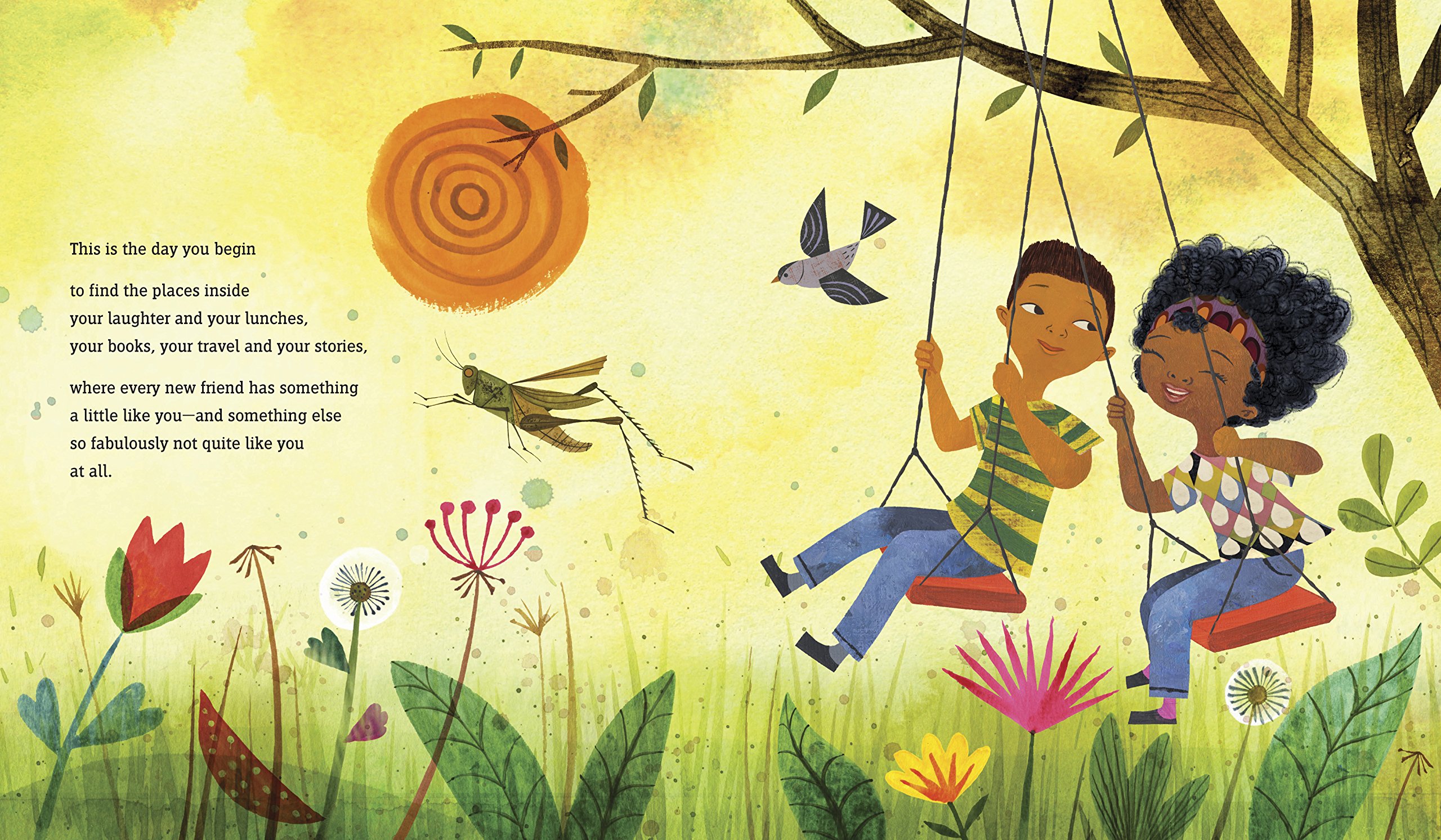
The story starts with a problem. Angelina, the main character, feels different from everyone else in her classroom, but eventually learns, once she starts sharing with others, that she is not so different after all. Woodson writes, “There will be times when you walk into a room and no one there is quite like you until the day you begin to share your stories.” Later in the book, the author concludes, “And, all at once, in the room where no one else is quite like you, the world opens itself up a little wider to make some space for you… This is the day you begin to find the place inside your laughter and your lunches, your books, your travels, and your stories, where every new friend has something a little like you – and something else so fabulously not quite like you at all.” So, in other words, Angelina also learns that she has things in common with those around her, even if it is just in one simple way. For example, in “The Day You Begin,” Rigoberto, Angelina’s classmate, has a sister who is also named Angelina.
What happens when two people are very different though? Well, we all usually have at least one thing in common. However, even if two people do not have much in common, that makes life special and interesting and neat (as Angelina learns)! It is more than okay to be different, unique and you should never be afraid to be yourself as an individual. (I thought this message of this story was super important but cute at the same time)! Plus, I think it is really awesome how Woodson did not just state “it’s okay to be different”, but, instead, SHOWED readers how it is okay and actually good to have differences. We can all connect around these differences too; they do not have to isolate us.
Therefore, I think this book brings up a lot for children (and people in general) including, but not limited to: race, differences, culture, diversity, uniqueness, individuality, and more.
One of my favorite pages in the book reads, “Maybe it [the thing that is different about you] will be your skin, your clothes, or the curl of your hair.” This particular part of the story was impactful for me and I thought it was significant because I think many children are insecure about things like the clothes/shoes they have. etc. and their appearance in general since it is usually the first thing people notice about you. I also liked this part of the book because it was very specific and shows us readers what Angelina was so shy about.
I think this book would be most suitable for kindergarten or grade 1. Not only would kindergarteners or first graders highly benefit from the message the book has to offer, but I think they would incredibly enjoy it. They would appreciate the bright colors and the almost whimsical pictures as seen here from one of the pages.
This book would be a great one for students (which I think would be almost all of us) that feel alone or different either initially or long-term. The story has a great, solid message that I truly believe we humans are never too old to hear about or read.
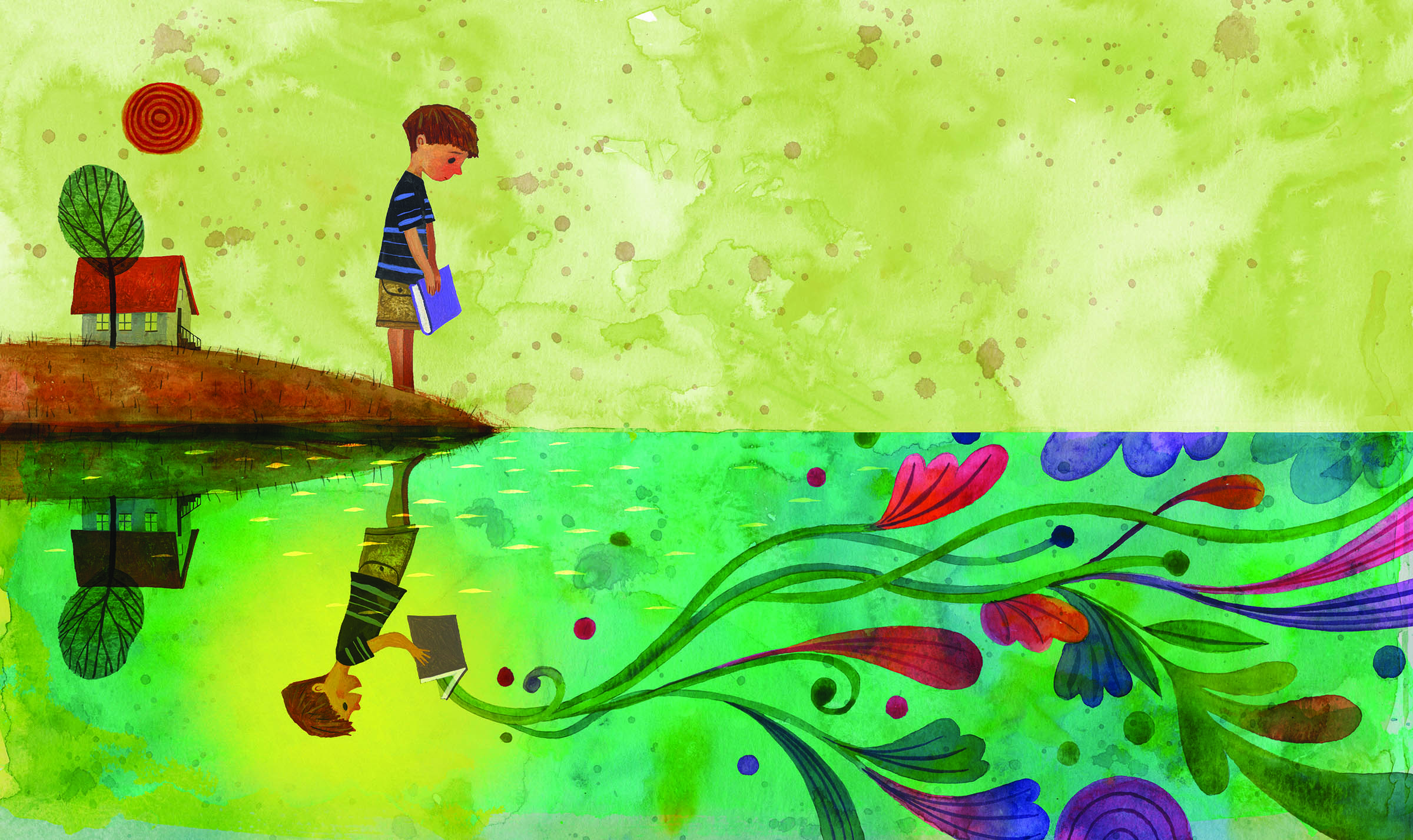
Another (more science-type) subject besides topics relating to diversity and culture that we teachers could bring up when discussing this book is mirrors and reflection. The teacher could start a lesson or mini lesson by turning to the last page/picture in this post (below) and explaining it to students. We could talk about objects that reflect light and objects that do not, how objects that act like mirrors and show us a glimpse of our reflections, need to be smooth and shiny. In other words, this one page could start a boatload of different activities, like science activities and sorting and predicting objects that reflect and objects that do not. I thought it was so cool that this book features this page because the program I am involved in called Jumpstart has a whole unit with nearly 5 books all about shadows and reflections!
I thoroughly enjoyed the book “The Day You Begin” due to its ability to spread out to multiple different subject areas and topics. Moreover, it features children of color which I strongly believe is important to incorporate regardless of the makeup of your students. Everyone should be represented, and, unfortunately, many books fail to feature children of color.
I was so impressed by this story and how deep it got and felt when I was reading it. I would not hesitate to incorporate this in a preschool classroom as well, though the vocabulary may be slightly advanced. It’s funny how a book on diversity (in some ways) can be so diverse in what it teaches its readers!
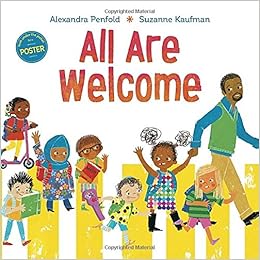
I found “All are Welcome”, by Alexandra Penfold and Suzanne Kaufman, to be a very welcoming (as the name would suggest) and inviting book. For this reason, then, I think this would be a stellar book to read on the first day of school in an elementary school classroom. Because of the vocabulary in the book like adversity, diversity, haste, etc., I would say that this book is mostly appropriate for second and third graders. However, it is valuable regardless, even if it was taught in a fifth grade classroom. The concepts that the book brings up like adversity and community really are strong, and the authors do a great job with the rhythm and rhyming in this book too.
For example, one page reads, “Pencils sharpened in their case. Bells are ringing, let’s make haste. School’s beginning, dreams to chase. All are welcome here.” Students will develop or nurture great phonemic awareness and can even try to finish the sentences that rhyme (a great challenge)! But, every page ends in “all are welcome here,” so students can always chime in at that part.
The book strays a little, though, from this “all are welcome here” pattern by the end of the book and instead says “you are welcome here.” I thought this was a nice twist and it really makes students feel valued, appreciated, and like they belong (because they do)! The illustrations also feature a wide variety of different students and teachers and I would find it somewhat surprising if a student could not recognize at least a little sliver/piece of himself/herself in the images, since they are so inclusive and diverse.
Another aspect of “All are Welcome” that I really love is the kindness this book emphasizes. It emphasizes kindness more on the side of implicit rather than explicit, which I think makes it all the more meaningful, effective, and powerful. In other words, instead of just saying “we need to share” or “we are kind” or “be kind to everyone,” this book actually SHOWS the kindness and the good nature of the students and teachers. Students can tend to put up a wall when they are being lectured at, but, instead, this book displays kindness rather strategically and thoughtfully. It shows characters sharing with others, welcoming others, and playing together and they are all smiling and happy. This makes students realize that if we include everyone (share, are kind, etc) that the outcomes will be positive.
I just have to mention, too, that the illustrations in the book “All are Welcome” are so detailed and wonderful that I think this book would also be great for a picture walk.
I also love how this book paints school in a positive light, as, unfortunately, I find that many characters in books these days do not want to go to school (for example, we have books like “No, I Won’t Go to School” and “I Don’t Want to Go to School”). Not that these books can never be read with children, but I appreciate the positivity in “All are Welcome.” In another way, although these characters in these books may then change their minds and learn that they actually love school, I think we need more books that are just purely positive and portray school in a good light. If students feel that others do not like school, they are more likely to be resistant to school (and education) too.
Yet another component of this text that I find valuable is the repetition. I touched on it briefly, before, but I want to expand in regards to theme. Students can make the connections/see that there are clear connections between the illustrations and the words as well as the connections from page to page. They go in order (the beginning of the book is at the start of the school day and the end is when the students go home and then go to school the next day or “start anew and fresh” the next morning). Because of this, then, we can discuss theme and other aspects of books with children. So, in this way, then, we can start incorporating even more important vocabulary (especially tier 2 words) that are essential for success later on.
The vocabulary in this book was priceless as well and really challenging, but appropriate for many children ages 7-9 as mentioned. I cannot believe how much of a “punch” such a book can pack! It explored not only diversity and inclusivity, but kindness, sharing, helping others, learning, new beginnings, etc. and, for all these reasons, I find this text irreplaceable. It truly is a fabulous work that I would definitely recommend to educators.
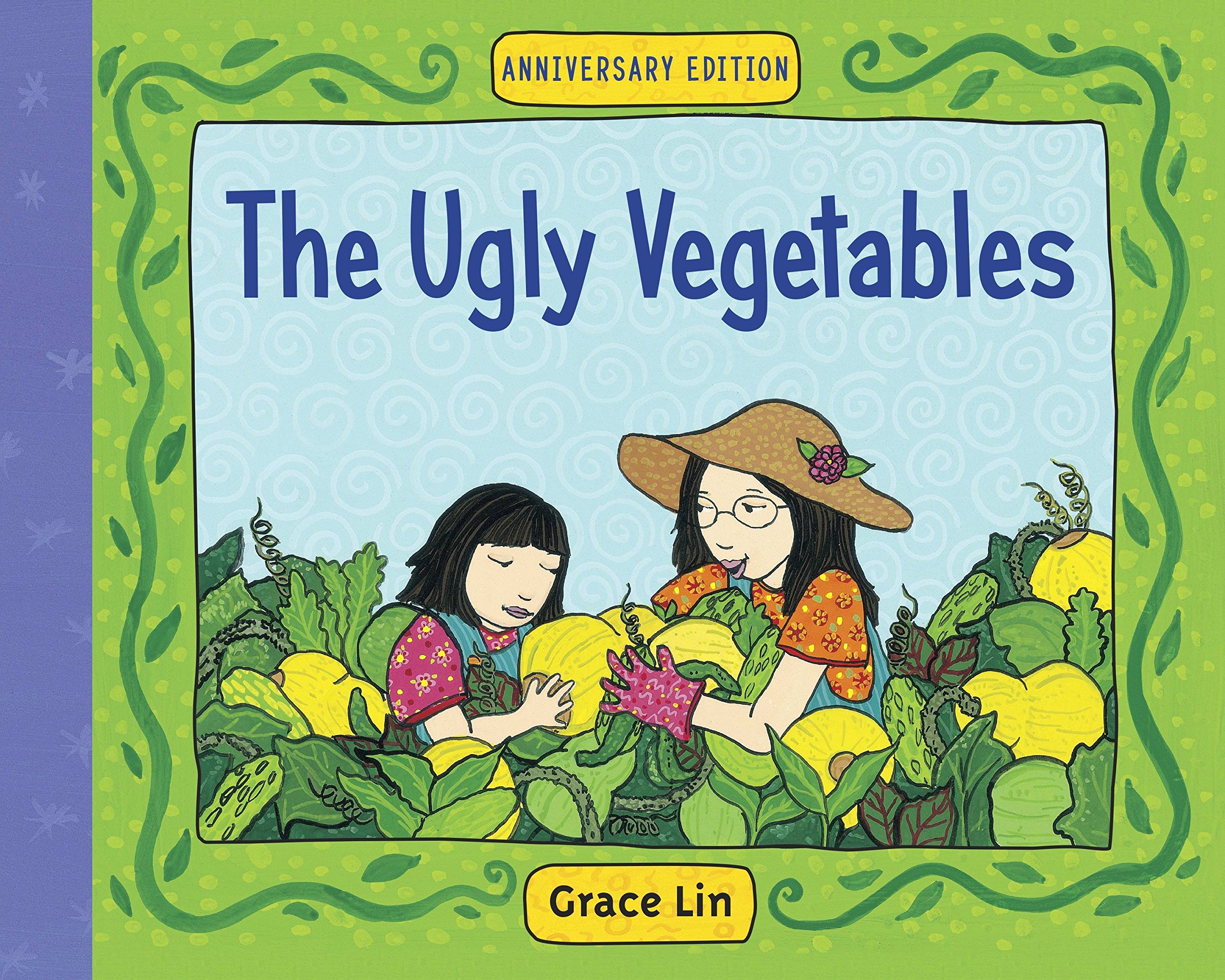
“The Ugly Vegetables” by Grace Lin is a title that focuses on the Chinese culture, but can be readily and easily expanded into a discussion of many other cultures. What I mean is that this text features the differences in the Chinese writing/language compared to English, for example, as well as introduces the idea that just because people and their cultures are different, we can share and work together. We all have something special and unique to offer and, if we collaborate and work together, great things can flourish (and in this book, things come to blossom quite literally).
Basically, this book is centered around a little girl who is planting a garden with her mother who is Chinese. From the young girl’s perspective, the flowers in the neighbors’ gardens seem much prettier and better than their plain, dark green vegetable garden. However, once the neighbors and the little girl and her family all come together to share the mother’s tasty Chinese vegetable soup, the young girl gains a great appreciation for the “ugly vegetables” from the garden she planted with her mother.
As you can see, so much can be gained and extracted from just this one book. First of all, we readers get to see how, as I mentioned, people may look differntly(speak differently, act differently, write differently, etc.) but we are all people and can come together and work as one or share with each other. In the book, the Chinese family shared their vegetables and the soup they made with their neighbors and the neighbors (from various different cultures) shared their beautiful flowers with the family. So, yet another thing we can take away from this book is how to work together and share effectively.
Not only does this book feature many Chinese vegetable names and how to pronounce them (with even a recipe for Chinese vegetable soup on the last page), but it incorporates the whole “you cannot judge a book by its cover” idea. Though this may seem cliche, I still think it is an important message for children to grasp, and can be taught from an early age. Sometimes our assumptions about books, movies, towns, etc. and even people are accurate, but, many times, they are simply just not true! They can also be hurtful and lead into stereotypes, judgement, and misconceptions.
Yet another powerful aspect of “The Ugly Vegetables” text is the fact that it can be used to describe how things grow. In Jumpstart, and as a Jumpstart team leader this year, my team and I are using this book to introduce our sixth unit (the “things that grow” unit). This book teaches about how vegetables, fruits, flowers, etc. need things like sunlight, food, water, etc. to grow and be healthy. So, this book offers a few different benefits and can be integrated into the classroom for a variety of different objectives and goals.
A branch out activity from this book could be having the class start their very own garden on school grounds or plant their own vegetables, flowers, or fruits in the classroom. This book, as you can see, is so rich in the fact that it is so diverse and opens the door to, truly, so many different activities and assignments. Personally, I know that when I was in kindergarten, my teacher would read books to start new units, and we even planted our own flowers on school grounds with parents and teachers. Even the principal got involved! It was a school-wide activity! I remember it even to this day!
Another reason why this book lends itself well to a unit on “things that grow,” gardening, etc. is because it elaborates and expands on the different tools needed when gardening. For example, it talks about wheelbarrows, hoses, and shovels and how they work to help vegetables, in this case, grow and flourish. So, in this way, there is so much vocabulary to gain from this short text, too, and it paves the way for such grand conversations!
Another aspect of the book that I must note, since I assume people who are reading this post right now are or want to be teachers, it is important that, if we read this aloud to children, that we know how to pronounce/read the names of the Chinese vegetables beforehand so we do not insult or make these new words seem “strange” or inferior to English. However, this is not such a challenge for readers since the names and their pronunciations in English are on the last page of the book. I just wanted to mention this because it is important that we teachers do our best to include all cultures, not alienate or belittle them.
Although we read this book by Grace Lin with children from 3-5 years old in preschool through Jumpstart, I think it is more appropriate for kindergarten and ages 5-6 and beyond. The vocabulary can be a lot and the words that stem off from this main, central vocabulary would, in my opinion, be better suited for the 5-6 age group. But, even though I am in college (and 20 years old), I gained a lot from this book which I think is saying a lot. It opened my eyes to different cultures and especially the Chinese culture and I got to explore how their writing/text differs from that of English works. In other words, I gained a great appreciation for the Chinese culture through this book. I really did!
In a nutshell, then, I think this book is a keeper. It is so enriching and the story is so creative but valuable all at the same time. I absolutely would recommend this book to teachers (especially those teaching in the younger grades). There is no way students would not be interested in this book either, as the colors are so bright and wonderful and the story is so genuine, sincere, and powerful. It would be hard to come up with a reason not to teach this book, and that, I think, says a great deal about the preciousness of this book.


 Emma's Education 307 Class