Literature and Read Alouds: Let’s Reflect!
The readings and assignments in the “Literature and Read Alouds” module were very eye-opening and informative at the same time. What may seem like a simple reading to children can really be a great way to engage students and make them actually enjoy the learning process. That is key in my opinion. If we as teachers do not make learning fun, then as soon as our students graduate (if they make it that far), they will happily neglect things like reading and writing for pleasure and say things like “I hate school” or “school is boring and miserable.”
So what exactly makes up a read-aloud? A read aloud needs to be effective to work though, so what makes a good one? We will dive in to these topics and more and make the connection between read alouds and literature skills.
Essentially, read alouds should be interactive and children should feel like they have a voice. Children can voice their opinions or make comments/questions and use their imagination and creativity during read alouds. As many researched have discovered too, read alouds open up students to the possibility that reading can be a joyful, entertaining, “edge of your seat,” exciting experience. It does not have to be dull. Plus, something that was emphasized in the articles was that students should be allowed and actually encouraged to choose books to read that they find relevant and interesting. When reading to the class, too, during a read aloud, the book or novel should not only be age appropriate, socially and emotionally suitable, etc. but also, for simplicity’s sake, let’s just say fun and entertaining! Read alouds should be lively! Many times teachers will actually have their students gather in the front of the room in a circle to read a text together and get talking. This can also be beneficial in building and establishing a strong “community of learners.”
Although there were several components to effective read alouds as discussed in the article,”Effective Read-Alouds: Is There a Common Set of Implementation Practices?” a few aspects of read alouds stand right out. The first one is the fact that read alouds include books that “are clearly selected based on the interests and needs of the students in the class.” For example, a class with many refugee students would not probably relate or benefit as much from a book about making apple pie on Thanksgiving. Instead, they might read a book that could generally relate to most students in the class (refugee or not) about overcoming a scary time or an obstacle in life. This would be far more relatable, relevant, and wise to incorporate for a read aloud in this particular classroom (for example).
Going into a second key component to this article was the fact that a clear purpose for the read aloud should be “set in stone” or just mapped out for the benefit of everyone involved. There should be a goal or objective(s) to be focused on. With teaching, it is important to be organized and although you can never predict exactly what will happen or what students will say, you, as the teacher, must guide your students in the learning process.
Another key component to the read alouds was the incorporation of animation, fluency, and expression. In classrooms where the teacher’s voices were packed full of expression and emotion, the students were “engrossed” in the books during the read-alouds. In this way, then, students gain an appreciation for books and literature and will be more motivated to learn through text or just simply pick up a book and read for pleasure. Either way, both will surely benefit them in the long run.
Lastly, in effective read alouds, the teachers and students would discuss the text and then move into independent reading and writing. Something the article stressed that I could relate to because it sparked up a memory for me was that our read alouds should segway into other topics when they end. The article gave an example where the teacher had ran out of time and needed to move onto the math subject, for example. This abrupt ending is not effective teaching, and, plus, read alouds should “never be an isolated event.” Read alouds provides so many benefits, but what goes on with the children/students after the read-aloud/story is what truly makes a great difference.
I can recall in my time as a Jumpstart member and now, as a Jumpstart Team Leader, read-alouds in the classroom (which, by the way, are not just beneficial for small children in preschool or kindergarten-the sixth grade). They can even be beneficial for middle and high school students too! Although read alouds will look different for different groups of students, (ie. preschoolers may go over what an illustrator is and what an author is as well as the spine of the book, back of the book, front of the book, etc.), they are super helpful. Interactive read alouds are great as they allow and encourage students to share their feelings, connections, emotions, thoughts, etc. with the rest of the class. Ideas build and thoughts blossom. Students grow as problem solvers and critical thinkers as well. Read alouds should almost even “blur the distinction” between reality and the story/text or “the story world and the children’s world.” The author of one of the articles calls this “super transposed- or one world being transparent over the other.” Another reason why this would be beneficial for children besides being enjoyable is because they can realize how to cope (in a healthful way) through reading and literature. They can escape daily stressors with a good book instead of turning to unhealthy, dangerous, and self-destructive forms of coping mechanisms.
Now, because one of the main purposes of read alouds is to model good expression and fluency when reading, a commonality between the articles presented in the fifth module was that teachers must be well prepared and enthusiastic about what they are reading and (on a bigger scale) what they are teaching. It does not take a rocket scientist to figure out that someone who is reading in a monotone, expressionless voice would be boring and almost painful to listen to. And, as I mentioned, although you can not ever predict exactly what students will do or say or react to, it’s almost guaranteed that they will be extremely interested in your reading if you do it with more and more excitement and enthusiasm.
Good literature skills are very closely and directly related to read alouds. First of all, read alouds model effective literature skills through the teacher and fellow classmates. In other words, the teacher shows how to read with prosody and fluency along with expression and the students can help model how to think about texts and literature including what types of questions to think about, what kind of connections you can make, etc.Another key way in which literature skills are related to read alouds is that they help foster and grow these skills that will be needed for the rest of their lives. Literacy development is greatly impacted in a positive way as students can grow and expand their base of knowledge. If the teacher is reading about a zoo for example, even if the children have never been to an actual zoo, they will learn new vocabulary related to the content (such as zookeeper, exhibit, etc.). This will ultimately make reading (and reading more challenging texts especially) more manageable and they will be able to comprehend challenging texts more easily.
Going along with the previous point, too, is the fact that children will not only expand on the concepts they know, but also the vocabulary they know including transition words and phrases. And, as we have discussed, vocabulary knowledge is the number one predictor of later on academic achievement. If read alouds can build our students’ vocabulary base, shouldn’t we incorporate them many many times throughout the year? I certainly think we should!
Without a doubt, there are several benefits to read alouds and they are super helpful when it comes to literacy skills/development. As a teacher, I will definitely implement them with my future students. In fact, in one of my other classes this semester, we are talking about how to develop reading prosody and voice, and I certainly think I will bring in these articles and show them to my classmates and/or professor. Essentially, read alouds can be the stepping stones to more complicated and advanced texts that our students need to be exposed to in order to improve their literature skills significantly. Why not implement them? There is really nothing to lose.
Annotations on Two Articles for the Fifth Module
Annotations For Workshop Methods Module
Emma Soltis
Annotations for the article on reading workshops
- Classrooms and lessons should be exciting and invigorating instead of just neutral (as many classrooms seem to be).
- In order “to offset this state of emotional neutrality in classrooms, teachers must thoughtfully reconsider how reading instruction may be reorganized to rekindle a sense of joy and ownership.”
- Providing interesting (and I also argue relevant and engaging) texts play a major role in students’ reading enjoyment.
- Many students spend barely a fraction of their school day reading. For instance, junior high school students only spend about 3% of their school day reading (and probably even less once they are out of school for the day).
- “Many teachers have become trapped into using worksheets as a means of managing reading classrooms” which is simply not the best way to go.
- These sheets only provide “perfunctory levels of reading practice.”
- In other words, these sheets only ask students to reflect basically (and not use critical thinking skills, problem solving strategies, etc.) that will ultimately benefit them in the long run.
- There are four main criteria for effective reading instruction.
- First of all, children/students should be able to have ownership over their school day/time.
- Next, “the classroom environment and daily routine must encourage reading as a primary activity integrated with other language modes, i.e. writing, speaking, and listening.”
- The classroom space should be a safe place for students and they should not be afraid to take learning risks such as getting a question incorrect or asking questions themselves.
- Worksheets encourage social isolation and independent work only (which clearly goes against the previous point).
- Third, the teachers must serve as role models by engaging in reading activities themselves.
- This really reminds me of the saying, “Teachers who love teaching teach children to love learning” for some reason. I think this is because in both the article and in the quote, the enthusiasm of the teachers rubs off on the students. It is inevitable and teachers need to set good, positive examples for students (and so can parents too).
- In other words, the more that children see their role models (like their guardians and teachers) reading, the more likely they will be to pick up a book themselves and engage with various texts.
- Fourth, “there must be opportunities for regular demonstrations of reading strategies, for sharing in the reading process including responding to books, and for evaluating individual reading progress.”
- The reading workshop was introduced as an alternative to traditional reading organizations/structures.
- There are five total components of the reading workshop (RW) structure.
- The components are Sharing time, the Mini-lesson, State-of-the-class, Self-selected reading and response, and Sharing time.
- The initial sharing time should take about 10 minutes. During this time, the teacher shares discoveries he/she has made in literature.
- The sharing time often serves as a catalyst into the mini-lesson time.
- The mini-lesson should take about 10 minutes as well.
- Mini-lessons are essentially “short, teacher instigated whole group instructional sessions for demonstrating reading strategies and preparing students to read new books successfully and independently.”
- Mini-lessons are also valuable and useful for children/a class with a lot of energy that will not pay attention for long periods of time.
- The State-of-the-class activity is next and usually lasts for about 3-5 minutes total.
- Basically, its purpose is to inform the teacher and individual children of their responsibilities and steps forward during the period of workshopping.
- Students fill in the blanks on the state-of-the-class chart (which is provided by the teacher).
- The next step is the Selt-reflected reading and response portion which takes approximately 40 whole minutes.
- This is the heart of the RW.
- This part of the RW encompasses three different student activities: Self-selected reading also known as SSR, Literature response, and Individual reading conferences.
- It is important to note that the original SSR period of 10 minutes may be lengthened if needed.
- I really like this flexible aspect of SSR as it really takes into account the fact that children can love reading and also honors the fact that reading is fun (and especially enjoyable when reading interesting texts).
- In regards to the Literature response groups, students pick their partners.
- I found this aspect of the LRGs noteworthy and somewhat surprising as well because throughout my fieldwork, for example, the teachers have usually assigned groups for the students to work in. I think their rationale/reasoning for this is to make sure the students actually get their work completed. However, there is value in allowing/giving choice to students too!
- I have a question then:Should we, as teachers assign groups to students sometimes and other times not? How do you know when/if to assign groups for students or not? Does it depend on the time of the school year (for example, assigning groups on the first few weeks of school and then letting students choose partners)? Should we balance it out a bit or always let students choose groups for reading?
- “The teacher meets with one LRG each day to participate and facilitate in response activities.”
- Then, during the last 10 minutes of every reading workshop, the instructor meets with two students in order to hold individual reading conferences.
- Students make appointments on a board (and sign up) and least one day before the conference so they are more prepared and not taken by surprise either.
- Finally, the last sharing time should take about 10 minutes.
- “As a daily closing activity in the RW, we recommend a sharing time where teachers and children come together for a few minutes to share with the group the activities, books, poetry, projects, etc., with which they were working.”
- I personally love this last bit of time allotted for sharing. Hopefully, too, every group is ding something a little bit different so it will be very interesting and engaging.
- Maybe students can also get inspiration and education from other groups/their peers because I truly believe that we are life-long learners and can learn from one another as well! It is certainly not just the teacher who should be teaching/providing knowledge to others. Students can too and we all offer a unique and different perspective on things. Plus, students can show/build on their strengths.
- For instance, if one student is very creative or wants to write a poem, he/she can! We need to acknowledge and encourage students to be who they are!
- And I can definitely understand the text/authors when they state that this last block of time will be difficult to end/bring to a close. There will just be so many ideas and so much to say (though these are both positive things).
- Then, the article moves into three different cases with three different teachers.
- Mr. Sheets is a fourth grade teacher who modifies the RW in some ways. However, he still finds that his students (probably around ages 9-11) benefit and enjoy their time during the RW.
- Miss Sabey is the next teacher who teaches third grade. Her implementation of the RW is very similar to Mr. Sheets except for the fact that she is making a huge transition toward literature-based reading instruction while still using the basal.
- Next, for another teacher who teaches fifth grade, Mrs. Hans, uses the RW on a local Indian reservation.
- She uses a literature-based reading program and commented that this RW plan/structure requires more work, time, and effort, but if implemented properly, the children will adore it!
- In a nutshell, the three cases provided show the flexibility and malleability of the Reading Workshop.
- “The Reading Workshop is not a panacea, but teacher who use it are [in fact] experiencing success, increased student involvement, and a sense of taking control of their own reading instruction.”
- I think the RW is definitely something I will frequently incorporate into my future classroom(s). It seems like a fun and engaging way to get students engaged and it only takes about one hour in total. Plus, I want my students to love and enjoy reading. It’s essential for academic and even life success! Being an effective and proficient reader is so important and comes in handy in so many ways.
Annotations on the Second Article titled “Help! What’s Wrong with These Literature Circles and How we can Fix Them!”
Annotations for Week Four
Ashley Preusse’s Thought and Annotation’s
- Children that come into our classroom “shatter” our thinking (through questions, inquiries, and learning)
- Aaron and the teacher share common interest and family backgrounds
- Aaron seems to have a higher level of education than his family because he is one of the only ones who can read
- The teacher is taken back by this “new world” that Aaron has shown her.
- Even though he’s struggling in school, he’s thriving and succeeding at home… there’s more to Aaron then what is seen in school.
- The teachers criticize the other teacher for wanting to make Aaron and other students feel more included by incorporating some of their life components into the classroom.
- Creating a classroom with activities so parents can feel connected to the academic curriculum their children are learning.
- Creating a partnership with schools and families
- Developing understanding of print (not just through being able to read, but by drawing and jotting down letters in a way that makes sense to the student)
- Re-occuring topic: How one child impacts your life. How one child changes your view on the world.
- Teacher have the opportunity to learn from their students because students provide conversation that is stimulating
Ashley Connolly’s Thoughts and Annotations
- Children can become our teachers
- Aaron comes from a single family home and walks alone to the bar after school every day to be with his mom.Aaron speaks the African American Vernacular English of his family and community.
- In school, he struggles, but in the bar, he is helping people read, and very advanced. He can play poker and read most signs around the bar.The teachers in the school have a lack of appreciation for the reading he can do. They believe that kind of reading is not true literacy.
- It is important to recognize each child’s individual successes, no matter how not typical they seem to you, to the child it may be normal and a big milestone.
- Children are more likely to be familiar with words, and signs they see often, such as food signs in a store, thus bringing in familiar pieces of literature can help struggling students.
- Bringing families and the community into the classroom can help build a sense of community inside the classroom, making the learning environment more comfortable for everyone. For example, when Aaron’s mother came in and spoke about the issues she faced in school the racial slurs stopped.
- All languages and dialects should be represented and respected in the classroom.
Emma Soltis’s Thoughts and Annotations
- As the text states in the beginning of the piece, “every child who comes through our classroom door becomes our teacher.” And, I would also argue that all children, even if they are not our own students, bring a different, pure, and untainted perspective to the world.
- In this article, Aaron is a student who some teachers would deem as not a “stellar student.” For example, he speaks African American Vernacular English instead of standard English that is widely accepted in educational and formal environments.
- Aaron and his teacher are alike in that they share similar family backgrounds.
- Like I mentioned, academically, Aaron is seemingly not a “stellar student.” However, at the bar, he helps people read, and he himself can make out what the signs around the bar are saying. However, the teachers at school do not recognize his reading as good enough or legitimate for this reason.
- Students may, and very often do, view the world in various different ways, and we, as teachers, must be understanding and respectful of that. One simple way in which we can do this is by bringing in books that are culturally relevant to our students. Another way (and probably the first step)is to get to know our students and families so we can become more educated on them (once again, here, the teacher is actually the learner). Plus, as the text states, “begin with the child and what the child knows.” In other words, build on students’ strengths too. In this story/case, one of Aaron’s many strengths would be knowing how to read signs in his surroundings (such as at the bar).
- When we do this, we can figure out the best way to approach teaching him/her.
- This piece also reminds me of an article I read in my Education 325: Classroom Management course about the power and strength of holding morning meeting for 15-25 minutes every day. Morning meeting really helps cutivate a caring, strong, and stable environment for everyone in the classroom and makes students feel safe to take risks (which is essential for learning as well).
- There is much controversy over language and dialects and which should be acknowledged and taught in school. However, I believe it is foundational that all languages be present in the classroom of your students. In other words, for example, if you have a predominantly Spanish-speaking classroom, or even if you just have one student who speaks Spanish, Spanish should be incorporated.
- It is not good enough to simply have a few books in the classroom that are in Spanish or have words in Spanish, every single day Spanish should be incorporated and included in a positive way.
- We never want students to view their language(s) or dialects as under-valued, unimportant, or inferior.
- Students are not the only ones who are learning in schools; teacher should be too!
- When the students and teacher understand one another, they have a much better chance of having a successful, productive, and full year!
- Remember to retell these stories to friends, family, colleagues, your principal at the school, etc. because we all need to understand that children are teachers too. We are all life-long learners.

Comments: 1
Book Reviews on “Danza” and “Jazz Baby”
Book 1: Jazz Baby
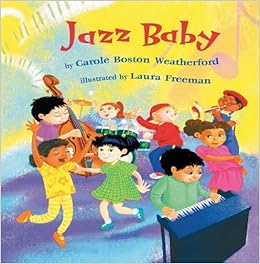
Ashley C: I really enjoyed this book. I thought the illustrations were really cute and helped bring the book alive. I think that this book is useful for younger grades because it can help teach rhymes. The book is full of rhymes, with a different rhyme on every page giving the book a musical flow to it. It also has some onomatopoeia in it which can be fun for younger kids because it captures their attention and keeps them focused on the words in the book.
Ashley P. commenting off of Ashley C.
I noticed the rhyme scheme displayed in this book as well. Each page had different rhyming words which follow an ABAB form. So the first and third word may rhyme, while the second and fourth would rhyme also. This book is perfect for introducing rhyme at an early age and can also help their vocabulary. Children can see the ending of the words and recognize the endings have the same sound.
Emma commenting off of Ashley C.
I also really enjoyed this book. It has a very playful yet whimsical nature that I believe young children would enjoy. In addition, I think this book would fit nicely in with many school districts, and it may sound odd, but I actually found this book to be quite empowering. In other words, in the beginning of the book, it says,”You’ve got music in your hands” and goes on to say that you have had it “since you were born.” This may make children feel uplifted and excited to make music and maybe a lesson or mini-lesson could stem off of this book. The students and teacher(s) could start thinking of all the components of a band and what kinds of things you need to get a group going too. They could also open up conversations about teamwork and working together which are both super important for children to talk and think about.
Ashley P: This book is great for younger ages. I liked how the pictures corresponded with the words were saying. If a child is unable to read, they can still look at the pictures and get an idea of what is trying to be said. Every page in the book displayed an example of repetition because it repeated the phrase “Jazz Baby, Jazz Baby”. Repeating something several times shows importance to that word or phrase. This is a basic example of repetition which can impact a child’s further understanding of repetition in their future education.
Ashley C. commenting off of Ashley P
I noticed the repetition of phrases throughout the book as well. Repetition is good, and important to note because often children require repetition to learn and understand things. I also think the fact that the pictures corresponded with the words is helpful as you said for kids who may not know how to read, or who are struggling to read.
Emma commenting off of Ashley P
I also find it useful that the pictures and words go so nicely together like you said Ashley P. For this reason, too, picture walks would be worthwhile for this book/story. The repetition is also very important for children who are young as it helps solidify knowledge. Basically, too, the more someone repeats something in general, the more his/brain is “wired” to think or see things that way. The synapses in the brain become stronger in other words and they make better connections.
Emma: Another noteworthy aspect of the book is the colors and images displayed. While this may sound simple, this book would fit perfectly in many different units or themes within a classroom or curriculum. For example, a color unit, a music unit, or even a unit on the five senses would work. To expand on the unit on the five senses though, this book could be incorporated because we could talk about how music is something you hear. Yes, you can see the instruments, but music itself is something we hear with our ears. In the book, Jazz Baby, there are musical notes coming out of the instruments, for example, but this is just a visual representation of music. What an interesting conversation we could have with our young students! This could be bridge over to a whole host of lessons (which are all from just one book)!
Ashley P commenting off of Emma
I really like this point your brought up. I only thought of this book for being used for maybe a musical lesson, but what you noticed were great ideas. This is a very colorful book, sometimes multiple colors can be very distracting to students but the way they’re used in this book they are very appealing to the eye. To expand on the music themed lesson, it shows multiple musical instruments; what you could do is ask play a track of each musical instrument and see if students are able to identify it. After listening and practicing, students can association that sound to the instrument it is.
Ashley C commenting off of Emma
Going off of what you both said, this book can be used for multiple lessons. I love the idea of doing a unit about the five senses with the book. You could have them read the book, play the music from the instrument and if you have access to it find the actual instrument to let them look at and explore themselves. I did not think of that when reading the book originally. It is great that you found another way to look at it.
Book 2: Danza
Ashley C: This book would be really useful for teaching kids about different cultures, and show how each culture is unique and brings something different to the world. I really love how inspiring this story is, it is really a great way to show kids how important it is to always follow their dreams, and that if they work hard any dream can come true. The pictures, tied in with the story make the book a feel-good book that I felt brought light to a culture that is not widely recognized or appreciated in the United States.
Ashley P. commenting off of Ashley C.
Exploring culture in a classroom can sometimes be very difficult, however, this book does a great job at it. A common topic such as dance, is something many students can relate to whether it be classical training or just for fun. Different cultures have different dances and I believe this book displays very well how dance is for everyone. Talking about diversity in a classroom through books can be really beneficial to students.
Emma commenting off of Ashley C.
I also agree with you, Ashley C., that children, though it may seem cliche to some, need encouragement and hope that they can make their passion their career and/or follow their dreams.It is so important that children know that they are free to express themselves and even stray from the career(s) they initially thought they would pursue. For example, right in the book Danza, Amalia was expected to be a schoolteacher, but she fell in love with dancing. (She was inspired by a couple of dancers in a city square.) In order for children to have strong social emotional development, they must be able to feel free to be who they want to be (doctor, lawyer, teacher, librarian, hairdresser, mechanic, etc). They should never be told that their dreams or goals are “stupid”, though many of us have sadly heard these horrible stories about teachers.
Ashley P: I really enjoyed reading the books Danza, it’s a great book to introduce different cultural aspects and traditions. In the book, it not only had words in English but a few in Spanish as well. This can have a great impact on student who are ESL or ELL because there language is being included into the daily lesson. Students who understand Spanish very well, can help students who may not understand what a word or sentence means. This can boost a students self esteem and create a more inclusive classroom. It also gives English speakers an advantages to learning another language and exposed to diversity. In the back of the book, there is a glossary which has the Spanish words and a definition of what they mean in English. Throughout the book, the author mentions a few words and then in the following sentences explains what that words means. This is a great techniques because it helps the students have a better understanding and will not lead to much confusion while reading.
Ashley C. commenting off of Ashley P
I enjoyed the different languages in the book as well. I agree that it would be a way to bridge the gap between Spanish and English speaking students. Together the students would be able to read it and explain different parts of the story to each other. It also gives English speakers a look into another culture that they may not ever experience and gives them a new respect for their classmates and their culture.
Emma commenting off of Ashley P
Ashley, I also really enjoyed the book Danza and also picked up on the fact that this book could trigger a rise in self-esteem for students who speak a language other than English. If they know that their teacher and classmates respect and welcome other languages too, they will be more likely to share with the class their own langauge(s). This, like you mentioned, creates/brings in more diversity in the classroom. And I do not believe it is enough to just have a Cultural Diversity Day once a year, for instance. Other languages and cultures should be included on a daily basis. We, as teachers, are truly impacting future generations in a big and direct way, and we need to account for all our students and all religions, backgrounds, cultures, languages, etc. I know I would feel extremely alone and disappointed if my classroom teacher(s) never recognized my culture for example. I know my life and attitudes may be a lot different if my Polish heritage or Catholic religion were never recognized or appreciated in my education journey/schooling. Everyone wants to feel included and welcome and especially in a school that they attend Monday to Friday.
Emma: Another significant aspect of the book Danza is the language included. The author, Duncan Tonatiuh, uses multiple words in Spanish to express the different parts of the story. For instance, he uses the words danza for dance and corridos for/to describe a dance very famous among the poor during the beginning of the twentieth century. He switches between Spanish and English and appreciates both throughout the story. I love books like these because they bring value to multiple languages. It is almost strange to have a book in only one language when you think about it since there are thousands of languages spoken throughout the world. Also, I love that new or possibly unfamiliar words (for readers) like choreographer are clearly defined or explained in the book Danza. This is super helpful especially for younger, less experienced readers.
Ashley P commenting off of Emma
Emma, I mentioned this as well and caught onto the authors approach to including Spanish and English in the book several times. I think it’s a wonderful way to expose students to another languages other than their own. Many children only know their own language and sometimes judge others for not knowing that language so this puts students at an advantage because they realize that everyone is different and it’s okay to speak differently. I think some of the pictures helped the students as well by portraying the different dances and costumes that the author was speaking about.
Ashley C commenting off of Emma
I agree the use of different words in different languages was a key aspect of the book. Instead of just describing the culture, the reader is immersed in the culture and gets to really see how the people speak. It gives a different level of appreciation to the culture that is being spoken about. The pictures along with these words brought in a lot of the culture.
Book 1: Jazz Baby
Ashley C: I really enjoyed this book. I thought the illustrations were really cute and helped bring the book alive. I think that this book is useful for younger grades because it can help teach rhymes. The book is full of rhymes, with a different rhyme on every page giving the book a musical flow to it. It also has some onomatopoeia in it which can be fun for younger kids because it captures their attention and keeps them focused on the words in the book.
Ashley P. commenting off of Ashley C.
I noticed the rhyme scheme displayed in this book as well. Each page had different rhyming words which follow an ABAB form. So the first and third word may rhyme, while the second and fourth would rhyme also. This book is perfect for introducing rhyme at an early age and can also help their vocabulary. Children can see the ending of the words and recognize the endings have the same sound.
Emma commenting off of Ashley C.
I also really enjoyed this book. It has a very playful yet whimsical nature that I believe young children would enjoy. In addition, I think this book would fit nicely in with many school districts, and it may sound odd, but I actually found this book to be quite empowering. In other words, in the beginning of the book, it says,”You’ve got music in your hands” and goes on to say that you have had it “since you were born.” This may make children feel uplifted and excited to make music and maybe a lesson or mini-lesson could stem off of this book. The students and teacher(s) could start thinking of all the components of a band and what kinds of things you need to get a group going too. They could also open up conversations about teamwork and working together which are both super important for children to talk and think about.
Ashley P: This book is great for younger ages. I liked how the pictures corresponded with the words were saying. If a child is unable to read, they can still look at the pictures and get an idea of what is trying to be said. Every page in the book displayed an example of repetition because it repeated the phrase “Jazz Baby, Jazz Baby”. Repeating something several times shows importance to that word or phrase. This is a basic example of repetition which can impact a child’s further understanding of repetition in their future education.
Ashley C. commenting off of Ashley P
I noticed the repetition of phrases throughout the book as well. Repetition is good, and important to note because often children require repetition to learn and understand things. I also think the fact that the pictures corresponded with the words is helpful as you said for kids who may not know how to read, or who are struggling to read.
Emma commenting off of Ashley P
I also find it useful that the pictures and words go so nicely together like you said Ashley P. For this reason, too, picture walks would be worthwhile for this book/story. The repetition is also very important for children who are young as it helps solidify knowledge. Basically, too, the more someone repeats something in general, the more his/brain is “wired” to think or see things that way. The synapses in the brain become stronger in other words and they make better connections.
Emma: Another noteworthy aspect of the book is the colors and images displayed. While this may sound simple, this book would fit perfectly in many different units or themes within a classroom or curriculum. For example, a color unit, a music unit, or even a unit on the five senses would work. To expand on the unit on the five senses though, this book could be incorporated because we could talk about how music is something you hear. Yes, you can see the instruments, but music itself is something we hear with our ears. In the book, Jazz Baby, there are musical notes coming out of the instruments, for example, but this is just a visual representation of music. What an interesting conversation we could have with our young students! This could be bridge over to a whole host of lessons (which are all from just one book)!
Ashley P commenting off of Emma
I really like this point your brought up. I only thought of this book for being used for maybe a musical lesson, but what you noticed were great ideas. This is a very colorful book, sometimes multiple colors can be very distracting to students but the way they’re used in this book they are very appealing to the eye. To expand on the music themed lesson, it shows multiple musical instruments; what you could do is ask play a track of each musical instrument and see if students are able to identify it. After listening and practicing, students can association that sound to the instrument it is.
Ashley C commenting off of Emma
Going off of what you both said, this book can be used for multiple lessons. I love the idea of doing a unit about the five senses with the book. You could have them read the book, play the music from the instrument and if you have access to it find the actual instrument to let them look at and explore themselves. I did not think of that when reading the book originally. It is great that you found another way to look at it.
Book 2: Danza
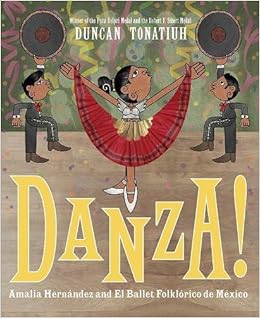
Ashley C: This book would be really useful for teaching kids about different cultures, and show how each culture is unique and brings something different to the world. I really love how inspiring this story is, it is really a great way to show kids how important it is to always follow their dreams, and that if they work hard any dream can come true. The pictures, tied in with the story make the book a feel-good book that I felt brought light to a culture that is not widely recognized or appreciated in the United States.
Ashley P. commenting off of Ashley C.
Exploring culture in a classroom can sometimes be very difficult, however, this book does a great job at it. A common topic such as dance, is something many students can relate to whether it be classical training or just for fun. Different cultures have different dances and I believe this book displays very well how dance is for everyone. Talking about diversity in a classroom through books can be really beneficial to students.
Emma commenting off of Ashley C.
I also agree with you, Ashley C., that children, though it may seem cliche to some, need encouragement and hope that they can make their passion their career and/or follow their dreams.It is so important that children know that they are free to express themselves and even stray from the career(s) they initially thought they would pursue. For example, right in the book Danza, Amalia was expected to be a schoolteacher, but she fell in love with dancing. (She was inspired by a couple of dancers in a city square.) In order for children to have strong social emotional development, they must be able to feel free to be who they want to be (doctor, lawyer, teacher, librarian, hairdresser, mechanic, etc). They should never be told that their dreams or goals are “stupid”, though many of us have sadly heard these horrible stories about teachers.
Ashley P: I really enjoyed reading the books Danza, it’s a great book to introduce different cultural aspects and traditions. In the book, it not only had words in English but a few in Spanish as well. This can have a great impact on student who are ESL or ELL because there language is being included into the daily lesson. Students who understand Spanish very well, can help students who may not understand what a word or sentence means. This can boost a students self esteem and create a more inclusive classroom. It also gives English speakers an advantages to learning another language and exposed to diversity. In the back of the book, there is a glossary which has the Spanish words and a definition of what they mean in English. Throughout the book, the author mentions a few words and then in the following sentences explains what that words means. This is a great techniques because it helps the students have a better understanding and will not lead to much confusion while reading.
Ashley C. commenting off of Ashley P
I enjoyed the different languages in the book as well. I agree that it would be a way to bridge the gap between Spanish and English speaking students. Together the students would be able to read it and explain different parts of the story to each other. It also gives English speakers a look into another culture that they may not ever experience and gives them a new respect for their classmates and their culture.
Emma commenting off of Ashley P
Ashley, I also really enjoyed the book Danza and also picked up on the fact that this book could trigger a rise in self-esteem for students who speak a language other than English. If they know that their teacher and classmates respect and welcome other languages too, they will be more likely to share with the class their own langauge(s). This, like you mentioned, creates/brings in more diversity in the classroom. And I do not believe it is enough to just have a Cultural Diversity Day once a year, for instance. Other languages and cultures should be included on a daily basis. We, as teachers, are truly impacting future generations in a big and direct way, and we need to account for all our students and all religions, backgrounds, cultures, languages, etc. I know I would feel extremely alone and disappointed if my classroom teacher(s) never recognized my culture for example. I know my life and attitudes may be a lot different if my Polish heritage or Catholic religion were never recognized or appreciated in my education journey/schooling. Everyone wants to feel included and welcome and especially in a school that they attend Monday to Friday.
Emma: Another significant aspect of the book Danza is the language included. The author, Duncan Tonatiuh, uses multiple words in Spanish to express the different parts of the story. For instance, he uses the words danza for dance and corridos for/to describe a dance very famous among the poor during the beginning of the twentieth century. He switches between Spanish and English and appreciates both throughout the story. I love books like these because they bring value to multiple languages. It is almost strange to have a book in only one language when you think about it since there are thousands of languages spoken throughout the world. Also, I love that new or possibly unfamiliar words (for readers) like choreographer are clearly defined or explained in the book Danza. This is super helpful especially for younger, less experienced readers.
Ashley P commenting off of Emma
Emma, I mentioned this as well and caught onto the authors approach to including Spanish and English in the book several times. I think it’s a wonderful way to expose students to another languages other than their own. Many children only know their own language and sometimes judge others for not knowing that language so this puts students at an advantage because they realize that everyone is different and it’s okay to speak differently. I think some of the pictures helped the students as well by portraying the different dances and costumes that the author was speaking about.
Ashley C commenting off of Emma
I agree the use of different words in different languages was a key aspect of the book. Instead of just describing the culture, the reader is immersed in the culture and gets to really see how the people speak. It gives a different level of appreciation to the culture that is being spoken about. The pictures along with these words brought in a lot of the culture.
Mini-Lesson Example for Reader’s Workshop
Reaction to the Readings from the Third Module
I took away so much incredible information from the readings and videos in this module. And what I especially loved about this third module is that it connects to other courses and the world we live in today so well! In other words, I am saying that these resources in module three are very relevant, important, and applicable to today’s modern society and we can learn a lot from the module as far as teaching children goes too.
Taken together, these resources show that we, as teachers, must not be close-minded. As the piece by Jacob McWilliams’ displays, there are not just two different ways of thinking or being. For example, not everyone fits “neatly and perfectly” into the gender he/she was assigned at birth. Putting people in boxes rarely does anyone any favors. In fact, it usually causes serious problems such as isolation, humiliation, and/or racism. Another aspect of this article that really stands out to me are the sentences about social norms and social influence. As a Team Leader for the Jumpstart program at my school, I see just how social norms play a major role in who children become/their likes, dislikes, and attitudes about certain things. For instance, one day during center time, I showed a poster I had made with tons of eye-catching, sparkly glitter on it. Several students (two of them 3 year old boys) came up to see what the glitter was like up-close. They seemed very intrigued and they liked the gold glitter a lot (which is generally viewed as very girly and feminine). Being that they were only 3 years old, however, they were not conditioned to the social norms of society that say that boys do not like sparkles or glitter and girls do. In that same class, there are also a few 4 year old boys and even 5 year old boys, and they all did not seem impressed by the glitter. This just shows that, as we grow older, we are conditioned more and more to behave in certain ways. We are even made fun of or bullied if we stray from these norms too, and this is why, as teachers, we must teach compassion, kindness, tolerance, and respect for others’ preferences, and the first step to being these things is to recognize that these norms do in fact exist. In my opinion, and thinking more deeply than McWilliams’ piece, these norms rob us of our full potential. For example, some women would probably make fantastic surgeons, engineers, etc., but, because of society, will never become these things. Women are often confined to a set number of jobs (teachers, stay-at-home mothers, etc.) by society’s standards. When people deviate, they are sometimes doubted, bullied, or stared at in disbelief. At a conference for Jumpstart in November of 2018, a speaker named Jamal Jones made a presentation that has stuck with me so much to this day. He first started by showing everyone a scenario (titled “The Surgeon’s Dilemma”). It is below for your reference as well.
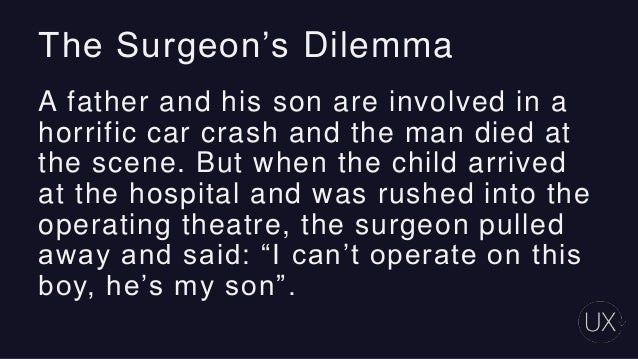
At the conference, everyone was told to read it closely and carefully, and then determine what was going on. Everyone in that room (and the room was jam-packed with at least 50 people) sat there stumped and confused. We all thought that the surgeon had somehow come back to life or was not really dead at the scene of the crash. We thought, “It must have been a mistake.” In fact, we came up with a bunch of crazy other scenarios besides the correct solution (which was that the mother of the boy was the surgeon and she said, “I can’t operate on this boy…”.
Clearly, this really opened my eyes to the fact that we, as human beings living in society, all have some level of bias (and unconscious bias) that we must work to erase or understand at the very least. Knowing we hold biases is the first step and once we realize we are biased, we can work to change. We cannot be in denial. We all have biases. The work from McWilliams’ really resonated with me and reminded me of this experience at the conference because, in both cases, we are talking about social norms/expectations and biases. I think it is essential that all people (and not just educators) understand this concept and grapple with it. It’s not enough just to be a “nice white teacher” (see https://www.ragazine.cc/2018/03/jessica-powell-and-meredith-sinclair-education/) because this perpetuates and worsens the damaging biases, stereotypes, etc. as I learned that semester through my classroom management course with one of the authors of this article, Dr. Jessica Powell.
Another article that really resonated with me is the article by Alfred Tatum about engaging African American males in particular in reading. It also connects to the school to prison pipeline in that teachers and administrators may not understand where their students are coming from and so they assume their behavior is ill-willed or see it as threatening. Then, they get the police involved and the school to prison pipeline perpetuates itself. An example of this is when African American males act tough or just simply interact with their peers. They may say things to appear tough (as society may have conditioned them to do) or tell what seem like cruel jokes to one another. What some teachers fail to understand, however, is the fact that this is how they “get along” or interact and it is not always necessarily bullying. In fact, it may just be jokes and play for them. It is important that we understand our students as teachers as well as the societies they live in. We must be cognizant of the cultures around us! If we know what’s relevant to our students, as the article touched on, then we can truly select literature/text that relates to our students. If we do not do this, it’s like trying to find a needle in a haystack or strike a specific chord out of a million musical instruments. Exactly. It’s nearly impossible. I firmly believe that teachers must be very aware of the problems, likes, dislikes, interests, social issues, responsibilities, etc. of their students. What a teacher sees in the classroom is just a very small and isolated section of a student’s life. It’s just a snippet; not the whole picture.
These are just a handful of the major takeaways I got from these articles of module three. They were super impactful and interesting and I am so grateful I was given this opportunity to read them! I feel I will be so much better of an educator now as a result of just a few somewhat short readings. It is truly amazing!
Slide Deck for the Second Module
Reactions to the Various Readings from Module 2
The focus of module 2 is “Elements of Literature.” I found the readings in this particular module extremely useful and informative.
Perhaps my favorite resource linked under this module was titled “Teaching Literary Analysis.” As I will not be completely reiterating or retelling this article, I did find the diagram included in the article about teaching literary analysis (by Rusul Alrubail) extremely well organized and digestible. The author broke down five different “steps” to the process of literary analysis. Plus, I must note, it is essential that we start viewing (if we have not already) literary analysis as a process with no clear-cut right or wrong answers.
Another one of my favorite resources included a glossary of literary terms like alliteration, satire, myth, novel, etc. (just to name a few). I am super excited to dive more into some of these ideas/concepts (such as myth) as we continue throughout the semester. My goal is to deepen my understanding of “everything literacy” so that I myself may be a more effective literacy teacher. If I simply sit back and do not employ critical thinking, problem solving, and deep analyzing, I will surely not reach my goal however. I truly do believe that all great teachers try their best to be their own very best (or personal best) because they want their students to also be their very bests! I want to try and work hard in this course not only for myself and my foundation of knowledge/knowledge base, but also for my future and current students (or students I work with through Jumpstart as a Team Leader, as a babysitter, etc.).
I believe it benefits a teacher to have great resources to draw upon, such as Traci Gardener’s lesson on plot structure, but it also takes a creative, open-minded, determined, committed, and hardworking mindset of a teacher to really teach well.
Because this second module included so many literary terms as I mentioned, it can be difficult to synthesize everything in a brief blog post. However, my hope is that all future teachers reading this will be inspired and motivated to really fully understand literature and grapple with what they do not already know. Even as teachers, we must constantly be learning.
 Emma's Education 307 Class