“Subway Sparrow,” by Leyla Torres, offers a look into how people from different cultures, languages, and backgrounds can all come together to accomplish a common goal (in this case, for the greater good of saving a small sparrow who gets trapped on the subway). The text features three languages: English, Spanish, and Polish, making it a very diverse and multicultural work. The illustrations also reflect different cultures through the way the people are dressed as well.
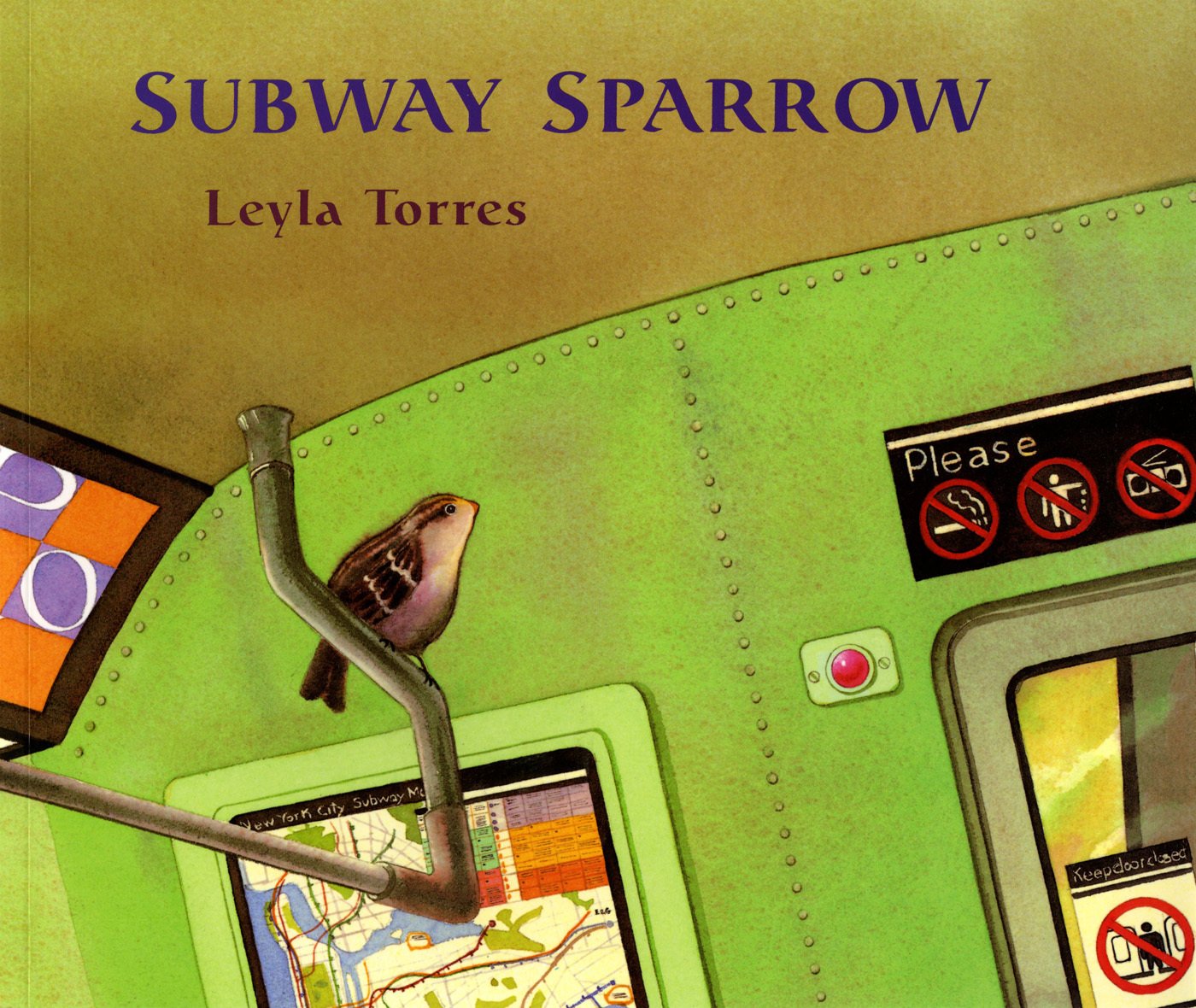
The book takes place on a subway train in Brooklyn, New York, so this would be a great book to teach in urban areas as well as areas around New York (like Connecticut) as students will be able to relate quite well hopefully.
Despite the language barriers between the English-speaking girl, the Spanish-speaking man, and the Polish-speaking woman, they work together, differences and all, to save the sparrow and release him back into the sky. The book ends with each main character saying “goodbye” to the sparrow in their own language. For example, the Spanish-speaking man says, “Adios, parajito” while the Polish-speaking woman says, “Do widzenia.” (Both phrases essentially mean “goodbye” as I know from my past experience with Spanish and my Polish-speaking grandmother).
Let’s focus on the fact that I am Polish and how this book made me feel that a part of my background was represented in this text. To be honest, it made me feel super good that my ethnicity was included in this book, especially since I did not expect it at first. The title and cover just seem like the book will be solely in English (which, truthfully, is just not as interesting, challenging, or intriguing). It’s great to switch things up and invite children from those featured cultures to participate and even translate! If we had a student who speaks French, for example, too, even though it is not featured in this book, we should certainly invite him/her to share how to say “goodbye” in his language. Not only would a multicultural work like this lead to grand, educational, and enriching conversations, but texts like this make students feel valued. And I can personally vouch for this, as I feel so good about my Polish background being represented in this book.
I love how this text is not so sanitized or “whitewashed,” as some of my professors would say. For example, on one of the last pages in the story, there is a man sitting on the sidewalk and he has a sign indicating he is homeless. While this may be an “absolutely not” for some teachers who would shy away from this page or even teaching this text altogether, I think it is valuable that this book includes this reality. We could do so much work around this one illustration and, at the very least, discuss what is happening here.
This book may be a great one to do a picture walk with too, as this book is very visual and picture-focused. There are not a boatload of words, either, so I think this book would be easy for many children to fully understand. Plus, the pictures and plot of the story is quite straightforward and clear. As a result, this book could definitely be taught in kindergarten in my view.
I would definitely teach this book in my future classroom as it is a great opener to many possible activities. For instance, I, as a teacher, could use this book to start talking about different races, different cultures, different languages, different socioeconomic statuses, and the list goes on. This text is so valuable for students to read and engage with and the added bonus is the simple, yet happy ending when the sparrow is able to fly high in the sky once again. I would certainly recommend this book to teachers and especially those teachers that need to switch up their solely English-based books.
 Emma's Education 307 Class