Book 1: Jazz Baby
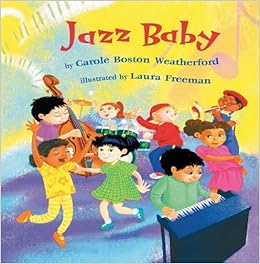
Ashley C: I really enjoyed this book. I thought the illustrations were really cute and helped bring the book alive. I think that this book is useful for younger grades because it can help teach rhymes. The book is full of rhymes, with a different rhyme on every page giving the book a musical flow to it. It also has some onomatopoeia in it which can be fun for younger kids because it captures their attention and keeps them focused on the words in the book.
Ashley P. commenting off of Ashley C.
I noticed the rhyme scheme displayed in this book as well. Each page had different rhyming words which follow an ABAB form. So the first and third word may rhyme, while the second and fourth would rhyme also. This book is perfect for introducing rhyme at an early age and can also help their vocabulary. Children can see the ending of the words and recognize the endings have the same sound.
Emma commenting off of Ashley C.
I also really enjoyed this book. It has a very playful yet whimsical nature that I believe young children would enjoy. In addition, I think this book would fit nicely in with many school districts, and it may sound odd, but I actually found this book to be quite empowering. In other words, in the beginning of the book, it says,”You’ve got music in your hands” and goes on to say that you have had it “since you were born.” This may make children feel uplifted and excited to make music and maybe a lesson or mini-lesson could stem off of this book. The students and teacher(s) could start thinking of all the components of a band and what kinds of things you need to get a group going too. They could also open up conversations about teamwork and working together which are both super important for children to talk and think about.
Ashley P: This book is great for younger ages. I liked how the pictures corresponded with the words were saying. If a child is unable to read, they can still look at the pictures and get an idea of what is trying to be said. Every page in the book displayed an example of repetition because it repeated the phrase “Jazz Baby, Jazz Baby”. Repeating something several times shows importance to that word or phrase. This is a basic example of repetition which can impact a child’s further understanding of repetition in their future education.
Ashley C. commenting off of Ashley P
I noticed the repetition of phrases throughout the book as well. Repetition is good, and important to note because often children require repetition to learn and understand things. I also think the fact that the pictures corresponded with the words is helpful as you said for kids who may not know how to read, or who are struggling to read.
Emma commenting off of Ashley P
I also find it useful that the pictures and words go so nicely together like you said Ashley P. For this reason, too, picture walks would be worthwhile for this book/story. The repetition is also very important for children who are young as it helps solidify knowledge. Basically, too, the more someone repeats something in general, the more his/brain is “wired” to think or see things that way. The synapses in the brain become stronger in other words and they make better connections.
Emma: Another noteworthy aspect of the book is the colors and images displayed. While this may sound simple, this book would fit perfectly in many different units or themes within a classroom or curriculum. For example, a color unit, a music unit, or even a unit on the five senses would work. To expand on the unit on the five senses though, this book could be incorporated because we could talk about how music is something you hear. Yes, you can see the instruments, but music itself is something we hear with our ears. In the book, Jazz Baby, there are musical notes coming out of the instruments, for example, but this is just a visual representation of music. What an interesting conversation we could have with our young students! This could be bridge over to a whole host of lessons (which are all from just one book)!
Ashley P commenting off of Emma
I really like this point your brought up. I only thought of this book for being used for maybe a musical lesson, but what you noticed were great ideas. This is a very colorful book, sometimes multiple colors can be very distracting to students but the way they’re used in this book they are very appealing to the eye. To expand on the music themed lesson, it shows multiple musical instruments; what you could do is ask play a track of each musical instrument and see if students are able to identify it. After listening and practicing, students can association that sound to the instrument it is.
Ashley C commenting off of Emma
Going off of what you both said, this book can be used for multiple lessons. I love the idea of doing a unit about the five senses with the book. You could have them read the book, play the music from the instrument and if you have access to it find the actual instrument to let them look at and explore themselves. I did not think of that when reading the book originally. It is great that you found another way to look at it.
Book 2: Danza
Ashley C: This book would be really useful for teaching kids about different cultures, and show how each culture is unique and brings something different to the world. I really love how inspiring this story is, it is really a great way to show kids how important it is to always follow their dreams, and that if they work hard any dream can come true. The pictures, tied in with the story make the book a feel-good book that I felt brought light to a culture that is not widely recognized or appreciated in the United States.
Ashley P. commenting off of Ashley C.
Exploring culture in a classroom can sometimes be very difficult, however, this book does a great job at it. A common topic such as dance, is something many students can relate to whether it be classical training or just for fun. Different cultures have different dances and I believe this book displays very well how dance is for everyone. Talking about diversity in a classroom through books can be really beneficial to students.
Emma commenting off of Ashley C.
I also agree with you, Ashley C., that children, though it may seem cliche to some, need encouragement and hope that they can make their passion their career and/or follow their dreams.It is so important that children know that they are free to express themselves and even stray from the career(s) they initially thought they would pursue. For example, right in the book Danza, Amalia was expected to be a schoolteacher, but she fell in love with dancing. (She was inspired by a couple of dancers in a city square.) In order for children to have strong social emotional development, they must be able to feel free to be who they want to be (doctor, lawyer, teacher, librarian, hairdresser, mechanic, etc). They should never be told that their dreams or goals are “stupid”, though many of us have sadly heard these horrible stories about teachers.
Ashley P: I really enjoyed reading the books Danza, it’s a great book to introduce different cultural aspects and traditions. In the book, it not only had words in English but a few in Spanish as well. This can have a great impact on student who are ESL or ELL because there language is being included into the daily lesson. Students who understand Spanish very well, can help students who may not understand what a word or sentence means. This can boost a students self esteem and create a more inclusive classroom. It also gives English speakers an advantages to learning another language and exposed to diversity. In the back of the book, there is a glossary which has the Spanish words and a definition of what they mean in English. Throughout the book, the author mentions a few words and then in the following sentences explains what that words means. This is a great techniques because it helps the students have a better understanding and will not lead to much confusion while reading.
Ashley C. commenting off of Ashley P
I enjoyed the different languages in the book as well. I agree that it would be a way to bridge the gap between Spanish and English speaking students. Together the students would be able to read it and explain different parts of the story to each other. It also gives English speakers a look into another culture that they may not ever experience and gives them a new respect for their classmates and their culture.
Emma commenting off of Ashley P
Ashley, I also really enjoyed the book Danza and also picked up on the fact that this book could trigger a rise in self-esteem for students who speak a language other than English. If they know that their teacher and classmates respect and welcome other languages too, they will be more likely to share with the class their own langauge(s). This, like you mentioned, creates/brings in more diversity in the classroom. And I do not believe it is enough to just have a Cultural Diversity Day once a year, for instance. Other languages and cultures should be included on a daily basis. We, as teachers, are truly impacting future generations in a big and direct way, and we need to account for all our students and all religions, backgrounds, cultures, languages, etc. I know I would feel extremely alone and disappointed if my classroom teacher(s) never recognized my culture for example. I know my life and attitudes may be a lot different if my Polish heritage or Catholic religion were never recognized or appreciated in my education journey/schooling. Everyone wants to feel included and welcome and especially in a school that they attend Monday to Friday.
Emma: Another significant aspect of the book Danza is the language included. The author, Duncan Tonatiuh, uses multiple words in Spanish to express the different parts of the story. For instance, he uses the words danza for dance and corridos for/to describe a dance very famous among the poor during the beginning of the twentieth century. He switches between Spanish and English and appreciates both throughout the story. I love books like these because they bring value to multiple languages. It is almost strange to have a book in only one language when you think about it since there are thousands of languages spoken throughout the world. Also, I love that new or possibly unfamiliar words (for readers) like choreographer are clearly defined or explained in the book Danza. This is super helpful especially for younger, less experienced readers.
Ashley P commenting off of Emma
Emma, I mentioned this as well and caught onto the authors approach to including Spanish and English in the book several times. I think it’s a wonderful way to expose students to another languages other than their own. Many children only know their own language and sometimes judge others for not knowing that language so this puts students at an advantage because they realize that everyone is different and it’s okay to speak differently. I think some of the pictures helped the students as well by portraying the different dances and costumes that the author was speaking about.
Ashley C commenting off of Emma
I agree the use of different words in different languages was a key aspect of the book. Instead of just describing the culture, the reader is immersed in the culture and gets to really see how the people speak. It gives a different level of appreciation to the culture that is being spoken about. The pictures along with these words brought in a lot of the culture.
Book 1: Jazz Baby
Ashley C: I really enjoyed this book. I thought the illustrations were really cute and helped bring the book alive. I think that this book is useful for younger grades because it can help teach rhymes. The book is full of rhymes, with a different rhyme on every page giving the book a musical flow to it. It also has some onomatopoeia in it which can be fun for younger kids because it captures their attention and keeps them focused on the words in the book.
Ashley P. commenting off of Ashley C.
I noticed the rhyme scheme displayed in this book as well. Each page had different rhyming words which follow an ABAB form. So the first and third word may rhyme, while the second and fourth would rhyme also. This book is perfect for introducing rhyme at an early age and can also help their vocabulary. Children can see the ending of the words and recognize the endings have the same sound.
Emma commenting off of Ashley C.
I also really enjoyed this book. It has a very playful yet whimsical nature that I believe young children would enjoy. In addition, I think this book would fit nicely in with many school districts, and it may sound odd, but I actually found this book to be quite empowering. In other words, in the beginning of the book, it says,”You’ve got music in your hands” and goes on to say that you have had it “since you were born.” This may make children feel uplifted and excited to make music and maybe a lesson or mini-lesson could stem off of this book. The students and teacher(s) could start thinking of all the components of a band and what kinds of things you need to get a group going too. They could also open up conversations about teamwork and working together which are both super important for children to talk and think about.
Ashley P: This book is great for younger ages. I liked how the pictures corresponded with the words were saying. If a child is unable to read, they can still look at the pictures and get an idea of what is trying to be said. Every page in the book displayed an example of repetition because it repeated the phrase “Jazz Baby, Jazz Baby”. Repeating something several times shows importance to that word or phrase. This is a basic example of repetition which can impact a child’s further understanding of repetition in their future education.
Ashley C. commenting off of Ashley P
I noticed the repetition of phrases throughout the book as well. Repetition is good, and important to note because often children require repetition to learn and understand things. I also think the fact that the pictures corresponded with the words is helpful as you said for kids who may not know how to read, or who are struggling to read.
Emma commenting off of Ashley P
I also find it useful that the pictures and words go so nicely together like you said Ashley P. For this reason, too, picture walks would be worthwhile for this book/story. The repetition is also very important for children who are young as it helps solidify knowledge. Basically, too, the more someone repeats something in general, the more his/brain is “wired” to think or see things that way. The synapses in the brain become stronger in other words and they make better connections.
Emma: Another noteworthy aspect of the book is the colors and images displayed. While this may sound simple, this book would fit perfectly in many different units or themes within a classroom or curriculum. For example, a color unit, a music unit, or even a unit on the five senses would work. To expand on the unit on the five senses though, this book could be incorporated because we could talk about how music is something you hear. Yes, you can see the instruments, but music itself is something we hear with our ears. In the book, Jazz Baby, there are musical notes coming out of the instruments, for example, but this is just a visual representation of music. What an interesting conversation we could have with our young students! This could be bridge over to a whole host of lessons (which are all from just one book)!
Ashley P commenting off of Emma
I really like this point your brought up. I only thought of this book for being used for maybe a musical lesson, but what you noticed were great ideas. This is a very colorful book, sometimes multiple colors can be very distracting to students but the way they’re used in this book they are very appealing to the eye. To expand on the music themed lesson, it shows multiple musical instruments; what you could do is ask play a track of each musical instrument and see if students are able to identify it. After listening and practicing, students can association that sound to the instrument it is.
Ashley C commenting off of Emma
Going off of what you both said, this book can be used for multiple lessons. I love the idea of doing a unit about the five senses with the book. You could have them read the book, play the music from the instrument and if you have access to it find the actual instrument to let them look at and explore themselves. I did not think of that when reading the book originally. It is great that you found another way to look at it.
Book 2: Danza
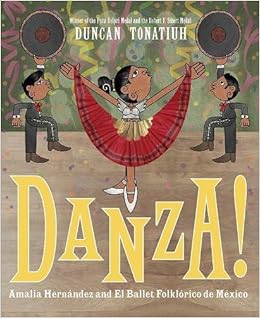
Ashley C: This book would be really useful for teaching kids about different cultures, and show how each culture is unique and brings something different to the world. I really love how inspiring this story is, it is really a great way to show kids how important it is to always follow their dreams, and that if they work hard any dream can come true. The pictures, tied in with the story make the book a feel-good book that I felt brought light to a culture that is not widely recognized or appreciated in the United States.
Ashley P. commenting off of Ashley C.
Exploring culture in a classroom can sometimes be very difficult, however, this book does a great job at it. A common topic such as dance, is something many students can relate to whether it be classical training or just for fun. Different cultures have different dances and I believe this book displays very well how dance is for everyone. Talking about diversity in a classroom through books can be really beneficial to students.
Emma commenting off of Ashley C.
I also agree with you, Ashley C., that children, though it may seem cliche to some, need encouragement and hope that they can make their passion their career and/or follow their dreams.It is so important that children know that they are free to express themselves and even stray from the career(s) they initially thought they would pursue. For example, right in the book Danza, Amalia was expected to be a schoolteacher, but she fell in love with dancing. (She was inspired by a couple of dancers in a city square.) In order for children to have strong social emotional development, they must be able to feel free to be who they want to be (doctor, lawyer, teacher, librarian, hairdresser, mechanic, etc). They should never be told that their dreams or goals are “stupid”, though many of us have sadly heard these horrible stories about teachers.
Ashley P: I really enjoyed reading the books Danza, it’s a great book to introduce different cultural aspects and traditions. In the book, it not only had words in English but a few in Spanish as well. This can have a great impact on student who are ESL or ELL because there language is being included into the daily lesson. Students who understand Spanish very well, can help students who may not understand what a word or sentence means. This can boost a students self esteem and create a more inclusive classroom. It also gives English speakers an advantages to learning another language and exposed to diversity. In the back of the book, there is a glossary which has the Spanish words and a definition of what they mean in English. Throughout the book, the author mentions a few words and then in the following sentences explains what that words means. This is a great techniques because it helps the students have a better understanding and will not lead to much confusion while reading.
Ashley C. commenting off of Ashley P
I enjoyed the different languages in the book as well. I agree that it would be a way to bridge the gap between Spanish and English speaking students. Together the students would be able to read it and explain different parts of the story to each other. It also gives English speakers a look into another culture that they may not ever experience and gives them a new respect for their classmates and their culture.
Emma commenting off of Ashley P
Ashley, I also really enjoyed the book Danza and also picked up on the fact that this book could trigger a rise in self-esteem for students who speak a language other than English. If they know that their teacher and classmates respect and welcome other languages too, they will be more likely to share with the class their own langauge(s). This, like you mentioned, creates/brings in more diversity in the classroom. And I do not believe it is enough to just have a Cultural Diversity Day once a year, for instance. Other languages and cultures should be included on a daily basis. We, as teachers, are truly impacting future generations in a big and direct way, and we need to account for all our students and all religions, backgrounds, cultures, languages, etc. I know I would feel extremely alone and disappointed if my classroom teacher(s) never recognized my culture for example. I know my life and attitudes may be a lot different if my Polish heritage or Catholic religion were never recognized or appreciated in my education journey/schooling. Everyone wants to feel included and welcome and especially in a school that they attend Monday to Friday.
Emma: Another significant aspect of the book Danza is the language included. The author, Duncan Tonatiuh, uses multiple words in Spanish to express the different parts of the story. For instance, he uses the words danza for dance and corridos for/to describe a dance very famous among the poor during the beginning of the twentieth century. He switches between Spanish and English and appreciates both throughout the story. I love books like these because they bring value to multiple languages. It is almost strange to have a book in only one language when you think about it since there are thousands of languages spoken throughout the world. Also, I love that new or possibly unfamiliar words (for readers) like choreographer are clearly defined or explained in the book Danza. This is super helpful especially for younger, less experienced readers.
Ashley P commenting off of Emma
Emma, I mentioned this as well and caught onto the authors approach to including Spanish and English in the book several times. I think it’s a wonderful way to expose students to another languages other than their own. Many children only know their own language and sometimes judge others for not knowing that language so this puts students at an advantage because they realize that everyone is different and it’s okay to speak differently. I think some of the pictures helped the students as well by portraying the different dances and costumes that the author was speaking about.
Ashley C commenting off of Emma
I agree the use of different words in different languages was a key aspect of the book. Instead of just describing the culture, the reader is immersed in the culture and gets to really see how the people speak. It gives a different level of appreciation to the culture that is being spoken about. The pictures along with these words brought in a lot of the culture.
 Emma's Education 307 Class